Shopping Cart
Nutrition tips for building muscle: protein, calories and more


Building muscle isn't just about lifting weights—it's also about strategic eating. While many beginners focus solely on the gym, hitting your calorie intake and spreading protein throughout your day are what really drive muscle protein synthesis and support muscle growth. This guide walks you through setting up your nutrition muscle gain plan, from figuring out your necessary calorie surplus to choosing the best foods.
Best Protein and Carbohydrate Sources for Muscle Gain
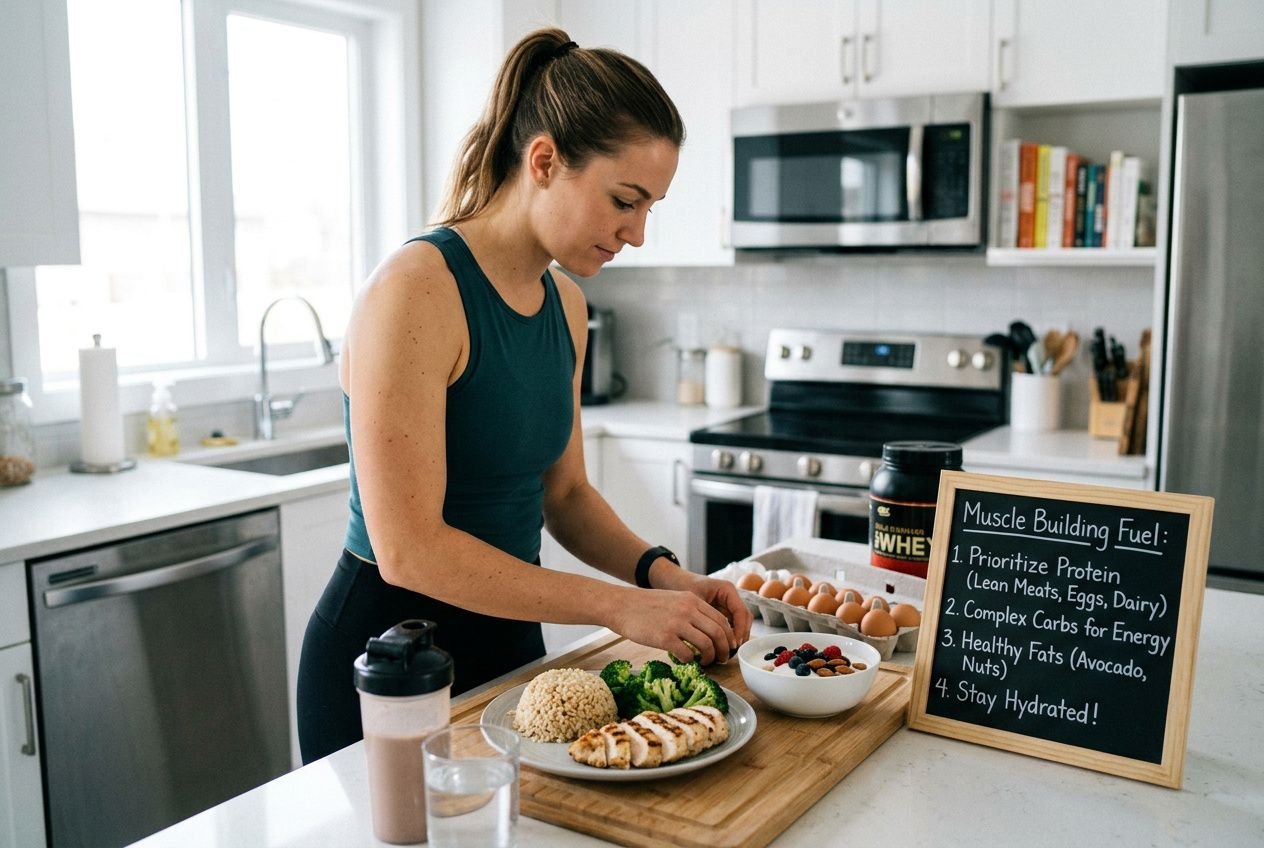
Real muscle building starts in the kitchen. Eating adequate protein, plus enough carbohydrates and healthy fats, lays the groundwork. Research shows that boosting your dietary protein intake to 1–1.5 grams per kilogram—when paired with lifting—is effective for building muscle.
How Much Protein Do Beginners Really Need?
To increase muscle mass, aim for about 1.4 to 2.2 grams of protein per kilogram of body weight each day. So, if you weigh 70 kg, that's 98 to 154 grams spread over your meals. This target is essential for optimizing recovery and preventing muscle breakdown.
- Eggs: A complete protein source rich in leucine, omega-3s, and vitamin D—all crucial for recovery.
- Fish: Salmon and other fatty fish offer high-quality protein plus omega-3s that reduce inflammation and support healing.
- Greek yogurt: Combines fast-digesting whey protein with slow-digesting casein, supplying a steady stream of amino acids.
- Poultry and lean beef: Affordable, high-quality protein sources packed with essential B vitamins.
Try to divide your protein intake evenly across three to six meals, getting about 20 to 40 grams each time. This steady supply helps maintain nitrogen balance and keeps your body repairing muscle—which is key for promoting muscle growth.
Top Carbohydrates and Fats for a Good Muscle-Building Diet
Carbs power your workouts. A solid good diet for beginner workout plans includes 3 to 5 grams of carbohydrates per kilogram of body weight. Starchy vegetables are great for healthy carbohydrate intake without excess calories, letting your protein focus on repair.
- Quinoa: Offers 8 grams of protein and 40 grams of carbs per serving—a complete food choice.
- Sweet potatoes: With roughly 23 grams of carbs each, they’re ideal for refilling glycogen stores post-workout.
- Avocado and nuts: Provide quality fats that help maintain healthy hormone levels without adding body fat.
Your daily healthy fats should make up about 20–35% of total calories. Good sources support hormone function and help you reach your calorie surplus without feeling stuffed.
Practical Tips to Build Your First Nutrition Muscle Gain Plan
Start by tracking everything you eat for three days with an app—this gives you a baseline. Seeing your current habits makes it easier to adjust your macros. Logging meals and snacks shifts you from random eating to intentional fueling.
Consider meal prepping on Sundays. Cooking batches of lean meats and grains simplifies your week and removes daily stress. Pre-portioned meals help you hit your daily numbers and build muscle mass efficiently.
Use a digital scale for accuracy. Even a small handful of nuts can add hundreds of calories you didn’t account for. Being precise ensures you’re growing muscle, not fat.
Nutrition Timing for Building Muscle Around Your Workouts
When you eat matters almost as much as what you eat. Spacing meals around your training sessions creates the right conditions for growth. Proper nutrition timing for building muscle means distributing protein intake every few hours and pairing it with carbohydrates at key moments.

What to Eat Before and After Your Workout
Plan a solid meal one to two hours before training. Combine high-quality protein with complex carbohydrates; a whey protein shake alongside a banana works well here. That combination sustains your energy levels and directly supports building muscle during the session.
After training, take in both protein and carbohydrates within a two-to-three hour window. Recovery stretches across the entire day, so consistent intake of nutrients matters more than sprinting to your shaker the moment you leave the gym. A sweet potato paired with a solid protein source replenishes glycogen and kicks off tissue repair efficiently.
| Timing | Meal Example | Key Nutrients |
| Pre-workout (1–2 hours before) | Chicken breast + brown rice | 30g protein, 50g carbs, minimal fat |
| Post-workout (within 2–3 hours) | Salmon + sweet potato | 25g protein, 40g carbs, omega-3s |
| Between meals (every 3–4 hours) | Greek yogurt + berries | 20g protein (whey + casein), carbs, probiotics |
| Before sleep (1–2 hours) | Casein shake or cottage cheese | 25–30g slow-digesting protein |
The whey casein blend in Total Protein triggers rapid muscle protein synthesis while releasing amino acids gradually over several hours. That dual action makes it a practical choice before sleep or immediately after training. For anyone navigating workout nutrition for beginners, this kind of straightforward product removes a lot of the guesswork around muscle building.
Why Protein Before Sleep Supports Overnight Muscle Recovery
During sleep, your body alternates between building and breaking down tissue. Consuming slow-digesting protein thirty to sixty minutes before bed gives your system a steady stream of amino acids throughout those hours. This single habit can meaningfully accelerate muscle mass gains over weeks and months.
Cottage cheese or a casein shake fits easily into an evening routine, requiring no preparation. That overnight amino acid supply turns rest into an active recovery phase rather than a gap in your nutrition timing for building muscle. Consistent delivery of nutrients across the full day, including sleep, is what serious muscle building actually depends on.
Recommended products

How many calories do you need to build muscle?
A proper calorie surplus is essential for optimal muscle growth. Eating exactly what you burn only maintains your current physique; it doesn't build anything new. Adding 350 to 500 extra calories per day creates the right conditions for gaining lean muscle mass without accumulating unnecessary fat.

Calculating your daily calorie surplus for muscle growth
Determining your calorie surplus for muscle growth starts with identifying your baseline energy expenditure. Someone burning 1,721 calories at rest needs around 2,221 daily calories to steadily gain muscle. Most people focused on muscle building land somewhere between 2,500 and 3,000 calories depending on their individual profile.
- Weekly weight targets: Aim to increase body weight by 0.25 to 0.5% per week. That pace favours actual muscle growth rather than simply accumulating excess fat.
- Tracking your intake: A digital food scale paired with a tracking app keeps your calories and nutrients accurate. Once you've internalized portion sizes visually, daily estimates become far less tedious.
- Adjusting over time: Revisit your intake every few weeks as your muscle mass increases. A heavier body burns more energy, so your surplus needs to rise accordingly to maintain progress.
- Choosing quality sources: Prioritize whole foods, rice, oats, milk, beef, and fish. These options deliver essential nutrients, keep hunger manageable, and make hitting your macronutrient targets straightforward.
Gaining weight too fast usually means fat is accumulating alongside muscle. Growing too slowly signals that your surplus isn't sufficient. Staying within the recommended weekly range is the most reliable way to build lean muscle mass efficiently.
Best high-protein and high-calorie foods and supplements
An effective high protein diet muscle building plan combines whole meals with targeted supplements. The muscle mass gainer delivers quality protein and carbohydrates to fuel demanding training sessions. For naturally lean individuals, this calorie-dense option removes the pressure of forcing down oversized meals.
- Whey protein powder: This fast-digesting supplement directly stimulates muscle protein synthesis after training. It works equally well as a post-workout recovery drink or a quick high protein meal replacement during busy days.
- Beef and fish: Both provide dense, high-quality protein alongside B vitamins and key minerals. Opting for lean cuts gives you all the muscle building nutrients without excess saturated fat.
- Protein pudding snacks: A well-chosen protein pudding snack delivers 27 grams of protein in minutes, with digestive enzymes and no added sugar, genuinely useful when time is short.
High-protein foods and powdered supplements complement each other rather than compete. Whole meals supply micronutrients that powders can't fully replicate, while supplements offer precise, convenient macronutrient control. Anyone serious about building muscle and increasing muscle mass should use both strategically to hit their daily protein targets without stress.
Frequently Asked Questions
Target 1.4 to 2.2 grams of protein per kilogram of body weight each day. A 70 kg person, for instance, needs between 98 and 154 grams to properly stimulate muscle protein synthesis. Spread that amount across three to six meals; this helps you gain muscle more consistently while limiting tissue breakdown.
Your calorie intake should sit around 350 to 500 kcal above your maintenance level. Someone focused on building muscle typically consumes between 2,500 and 3,000 calories, depending on training volume. A slight, steady weekly weight increase is what you're after, enough to support muscle growth without piling on excess fat.
Affordable staples like eggs, canned fish, chicken, and milk deliver strong nutrition at a low cost; there's no need to overspend on muscle building. These foods cover the essentials required for solid results. Supplements have their place, but a diet built around whole foods is still the real driver of progress.
Share this article: