
Shopping Cart
7-Day nutrition plan for muscle gain: the ultimate meal guide


A solid nutrition plan for muscle gain is the foundation every training programme depends on. You need clear calorie targets, sensible macros, reliable food choices, and a daily structure that keeps your protein intake and total calorie intake consistent.
Building your 7-day muscle gain meal plan
A well-built meal plan for muscle gain takes the guesswork out of eating, keeps your calorie surplus under control, and makes sure your muscles receive the right nutrients day after day. That consistency drives adaptation and gives a real plan for muscle traction across the week.
Alongside this, the right supplements can support the work you are already doing. A quality creatine blend supplement such as Crea-TEN can improve ATP regeneration and muscular hydration, which helps you train harder and recover better within a serious plan for muscle gain.
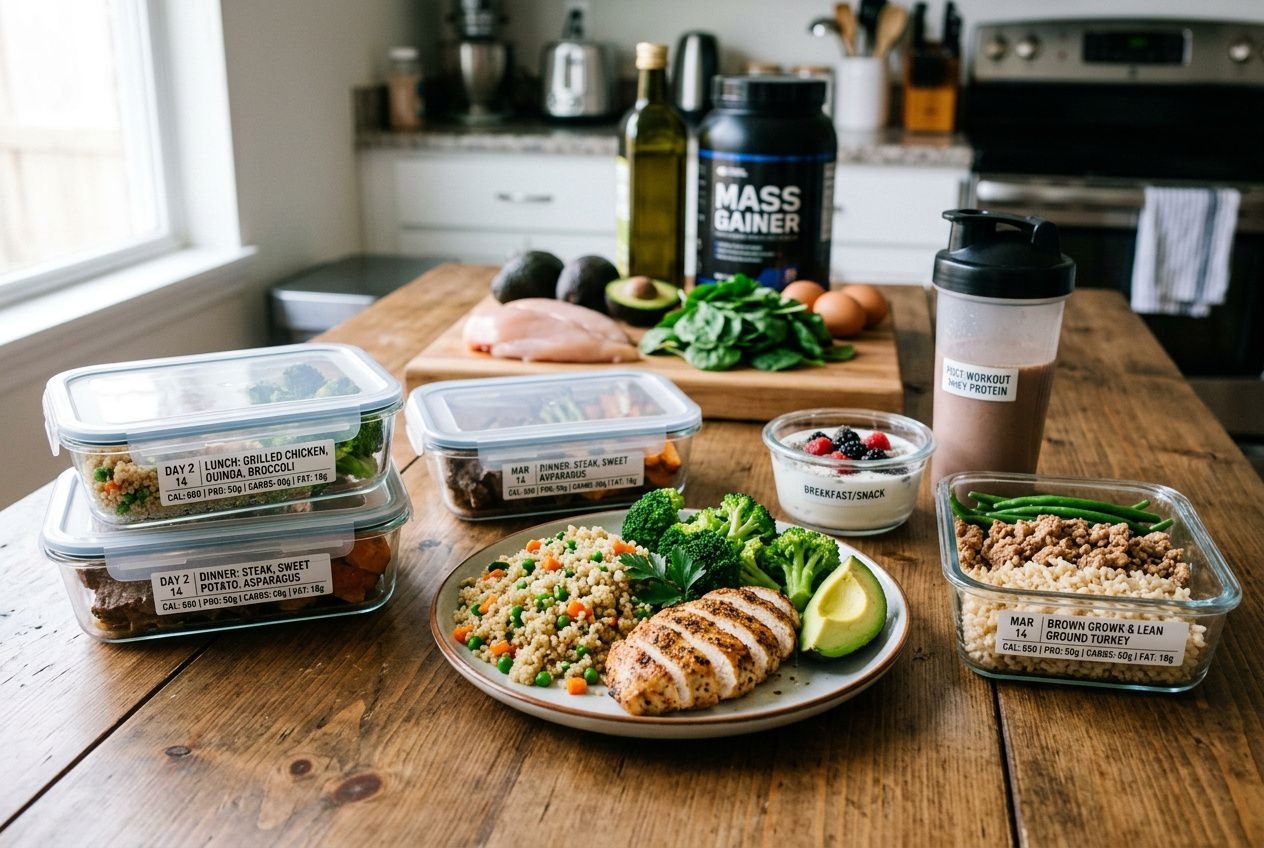
How to calculate your calorie surplus for muscle gain
Every effective meal plan starts here: with a genuine calorie surplus. Multiply your basal metabolic rate by your activity multiplier, from 1.2 if you are sedentary up to 1.725 if you are very active, to estimate total daily energy expenditure. From there, add 250 to 500 calories, or roughly 10 to 20% above maintenance, to create the conditions for muscle building.
For many people, that puts daily intake somewhere between 2,500 and 3,000 calories. The exact number still depends on body weight, training frequency, and activity outside the gym. A useful benchmark here is weekly gain: around 0.5 to 1% of body weight per week tends to support muscle gain without pushing fat gain too far.
- Calculate TDEE first, then apply your surplus once maintenance is clear.
- Start conservatively, because an extra 250 calories is often enough to support muscle growth.
- Track consistently, using at least three weigh-ins per week to spot real trends.
- Adjust monthly, since rising body weight usually means rising maintenance needs.
If body weight has not moved after two weeks of accurate tracking, your intake is likely still at maintenance, so add 150 to 200 calories and reassess. That is the difference between a productive nutrition plan for muscle gain and one that looks good on paper but stalls in practice.
Macronutrient targets to structure every meal
Once calories are set, distribution determines how effectively those calories drive muscle gain. A sound macronutrient split means aiming for protein intake of 1.4 to 2 g per kilogram of body weight, carbohydrates at 40 to 50% of total calories, and healthy fats at 20 to 25%. Each meal should usually provide 25 to 40 g of protein to support ongoing muscle repair and muscle recovery.
From there, spread your intake over 3 to 6 meals per day. That approach helps you hit your macros without feeling overly full, and it keeps energy levels steadier around training. The whey protein isolate Iso-XP provides 22.5 g of protein per 25 g serving, with zero sugar, zero fat, and minimal lactose.
Why meal timing matters in a 7-day diet
Once your daily totals are in place, timing helps those calories work harder. Well-planned meals for muscle gain around training can improve performance and recovery, especially when a pre-workout meal is eaten 2 to 3 hours before lifting. Combine complex carbohydrates with moderate protein: enough to fuel the session without weighing you down.
Post-workout carries the most weight. At that point, your muscles are more receptive to fast-digesting amino acids, and a double serving of whey delivering 50 g of protein can help start muscle recovery quickly. Pairing that with simple carbs, such as a banana, helps restore glycogen while supporting muscle building.
Breaking the overnight fast with a fast-digesting protein source helps limit catabolism and restores nitrogen balance early in the day. Alongside this, essential amino acids in tablet form, such as Amino 2700, provide all nine EAAs including BCAAs three times daily, which reinforces both the timing structure and the overall plan for muscle gain.
Best muscle-building foods to include in your diet
Your food choices shape what happens in a calorie surplus. When your diet is built around whole, nutrient-dense foods, each meal is more likely to support muscle growth and muscle mass, not just extra body fat.
High-protein animal and plant foods for bulking
For anyone building from a low base, protein usually comes first. Lean, calorie-efficient choices such as chicken breast, turkey, lean beef, sirloin steak, salmon, tilapia, eggs, Greek yoghurt, and cottage cheese give you complete amino acid profiles without making a bulking diet harder to control.
Plant options still have a clear place. Lentils, chickpeas, black beans, and tofu can all contribute to muscle gain, although plant-based athletes may need protein powder to reach the leucine intake that helps support muscle growth. Red meat and some fish also provide creatine naturally, a useful benchmark here for supporting repeated high-effort training.
| Food source | Protein per 100 g | Key benefit |
| Chicken breast | ~31 g | Lean, versatile, high leucine |
| Canned tuna | ~25 g | Convenient, low fat |
| Salmon | ~20 g | Omega-3s, anti-inflammatory |
| Eggs | ~13 g | Complete amino acid profile, affordable |
| Greek yoghurt | ~10 g | Casein-rich, ideal before bed |
| Lentils (cooked) | ~9 g | Plant-based, high fibre |
Carbohydrates and fats that fuel muscle growth
Once protein is covered, energy supply matters just as much. Tracking protein per meal helps, but your best progress still depends on reliable carbohydrates: oats, brown rice, rice, quinoa, sweet potatoes, wholegrain breads, and butternut squash all help restore glycogen and keep training output high.
Alongside this, fats do more than add calories. Avocados, almonds, walnuts, chia seeds, olive oil, and oily fish provide healthy fats that help maintain hormone production and manage inflammation during hard training. Colourful fruit and vegetables support recovery and immune function, both of which matter more, not less, when training load is high.
Recommended products

Sample meal plan and daily protein diet structure
Spreading protein across six eating occasions, roughly every 2–4 hours, helps maintain a positive nitrogen balance and gives your muscles a steady supply of amino acids through the day.
Morning, pre- and post-workout meal timing
- Morning (on waking): a fast-absorbing protein source such as whey isolate or eggs helps break overnight catabolism and restore nitrogen balance before breakfast.
- Pre-workout (2–3 hours before): a meal built around complex carbohydrates and moderate protein, such as oats with Greek yoghurt or chicken with brown rice, supports steady training energy.
- Post-workout (within 30 minutes): fast-digesting protein with simple carbohydrates helps start muscle repair and replenish glycogen; a protein shake with a banana covers both efficiently.
Post-training is one window where a larger serving can make sense. In practice, a 50 g double serving of whey isolate is often well tolerated after hard training, when depleted muscles can handle more protein and rapid absorption supports the anabolic window. Iso-XP provides 89 kcal per 25 g serving, which lets it fit neatly into a plan for muscle gain without skewing your calorie target.
Evening and before-bed nutrition for muscle recovery
Once the training window is covered, the focus shifts to the night. Food for muscle growth before bed is the right choice when you want to support overnight muscle recovery without leaving long gaps in amino acid intake. Slow-digesting protein, such as cottage cheese, Greek yoghurt, or a casein shake, helps limit overnight muscle breakdown while you sleep.
If fat gain starts to outpace progress, understanding how a calorie deficit is calculated gives useful context: trimming 100–200 calories from your surplus is usually enough to bring intake closer to maintenance without undermining recovery.
Managing your calorie surplus without gaining excess fat
A controlled calorie surplus of 250–500 calories tends to work better than aggressive overfeeding. A useful benchmark here is 0.5–1% bodyweight gain per week: enough to keep progress moving, without pushing fat gain too hard. If progress stalls, an extra 150 calories is often enough to restart momentum.
Muscles are roughly 75% water, and drinking at least one gallon per day helps reduce cramps and supports recovery.
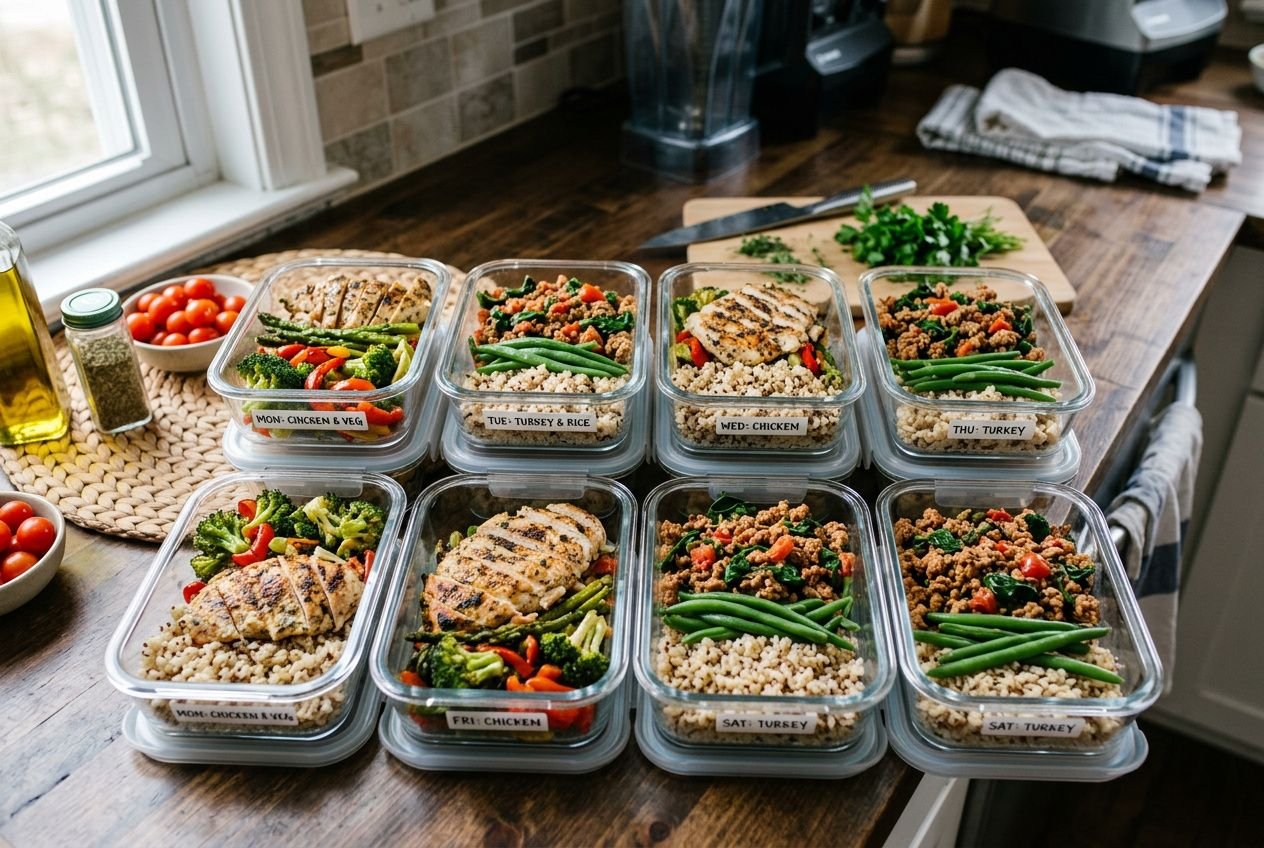
Meal prep is what keeps the structure intact on busy days. Pre-cooked rice, batch-cooked protein sources, and portioned snacks remove guesswork on busy days and make a meal plan far easier to follow. A simple day might open with eggs and wholegrain toast, move to Greek yoghurt with berries mid-morning, then grilled chicken with quinoa and spinach at lunch. Almonds alongside a protein shake bridge the afternoon; salmon with sweet potato and kale at dinner, then cottage cheese before bed.
Supplements and diet tips to maximise muscle gain
Whole foods still set the foundation. Yet even a well-built diet can leave small gaps, and the right supplements help close them without replacing your core meal plan. Used properly, protein powder, creatine and amino acid tablets fit around your meals for muscle gain and give you practical support as you work to build muscle and accelerate recovery.
How protein and creatine supplements support your diet
A meal plan for muscle gain calculator is a useful benchmark here: it helps you set calorie, macronutrient and protein targets before supplements enter the picture. Once those numbers are clear, a stack can cover what whole food intake cannot always handle, especially around training or when a full meal is not realistic.
- Iso-XP whey isolate: 22.5 g of protein per 25 g serving, zero sugar, zero carbs and 89 kcal. A clean option at any point in the day.
- Crea-TEN creatine blend: ten creatine forms in one tablet to improve bioavailability, replenish phosphocreatine stores, raise ATP output and sustain muscular hydration during high-intensity work.
- Amino 2700 tablets: all 18 essential and non-essential amino acids, including BCAAs, taken three times daily to maintain muscle protein synthesis and support recovery between sessions.
Whey isolate offers fast-digesting protein on waking, after training, or any time a solid meal would be awkward. Creatine supports repeated high-output efforts and draws water into the muscle cell, which can improve training performance and contribute to visible size over time.
Alongside this, amino acid tablets supply leucine, the BCAA that activates the mTOR pathway tied to muscle protein synthesis. In practice, combining these with well-timed protein sources creates a layered approach that strengthens recovery, training output and ongoing muscle growth. This is the right choice when your nutrition plan for muscle gain is sound but daily logistics make perfect food timing difficult.
Adapting your meal plan for different goals and genders
The same principle applies when you tailor a plan for muscle gain to the individual. A nutrition plan for muscle gain female follows the same structure as any other plan for muscle: enough protein, carbohydrate to fuel training and a controlled calorie surplus. The difference comes down to the totals, which are often lower because average body weight and basal metabolic rate tend to be lower.
Whether your goal is a bigger frame, leaner muscle mass or a steadier rate of muscle gain, the framework stays consistent: target calories, structured meals for muscle gain, and timing that supports training.
Once the numbers are set, food choice decides how sustainable the process feels. A reliable bulking diet is usually built around lean protein sources, slower-digesting carbohydrates such as rice and oats, and quality fats from fish and nuts. Those foods supply the nutrients needed for recovery and muscle building without making the wider diet harder to follow.
Foods and habits to avoid during a muscle-building phase
That structure only works if the surplus comes from food that does something useful.
- Alcohol: impairs muscle protein synthesis and slows recovery, while also affecting next-day training performance.
- Added-sugar foods: sweets, biscuits, fizzy drinks and pastries raise calories quickly but offer little in the way of structural nutrients.
- Deep-fried foods: often add inflammation and low nutritional value, which works against the quality of your nutrition plan for muscle gain.
Worth noting before training: very high-fat meals, large servings of high-fibre vegetables such as broccoli or cauliflower, and carbonated drinks can slow digestion and increase stomach discomfort mid-session. As soon as training is close, simpler carb-and- protein options tend to work better for energy and session quality. That keeps your meal plan for muscle gain aligned with performance, not just calorie intake.
Frequently asked questions
How much protein do you actually need to build muscle?
A useful benchmark here: 1.4–2 g of protein per kilogram of body weight per day. Split that across several meals, with around 25–40 g per meal, and space them 2–4 hours apart to support ongoing muscle protein synthesis and a positive nitrogen balance. Around training, fast-digesting options such as whey isolate fit well; later in the day, slower choices like cottage cheese are often the right choice when you want a steadier release.
Can you build muscle on a plant-based diet?
Yes, though your diet needs a bit more structure. Common plant protein sources such as lentils, chickpeas, tofu and black beans can support muscle gain, but they are often lower in leucine, the BCAA that helps trigger muscle protein synthesis. In practice, a complete whey or plant-based protein powder, alongside an amino acid supplement that provides all nine essential amino acids, can help close that gap.
How do you know if your calorie surplus is working?
The difference comes down to the trend. Check your body weight at least three times per week and aim to gain around 0.5–1% of body weight weekly during a calorie surplus. If nothing changes after two weeks of consistent eating, intake is likely sitting at maintenance: add 150–200 calories and reassess. By contrast, if weight climbs faster than 1% per week, trim the surplus slightly to keep growth controlled and biased towards muscle mass.
Share this article: