Shopping Cart
Protein powder for muscle gain: beginner's guide uk


New to the gym and searching for a protein powder for muscle gain: this guide covers what matters, the different types of protein powder, how much protein your training requires, and which format suits your goals and budget.
What do the different types of protein powder do?
Protein powder is not one single thing. The main types differ in how they are filtered, how quickly they digest, and how they support muscle growth and recovery.
That matters from the start. The right format helps you match your powder to your goal rather than relying on label claims alone.
Whey protein concentrate, isolate and hydrolysate explained
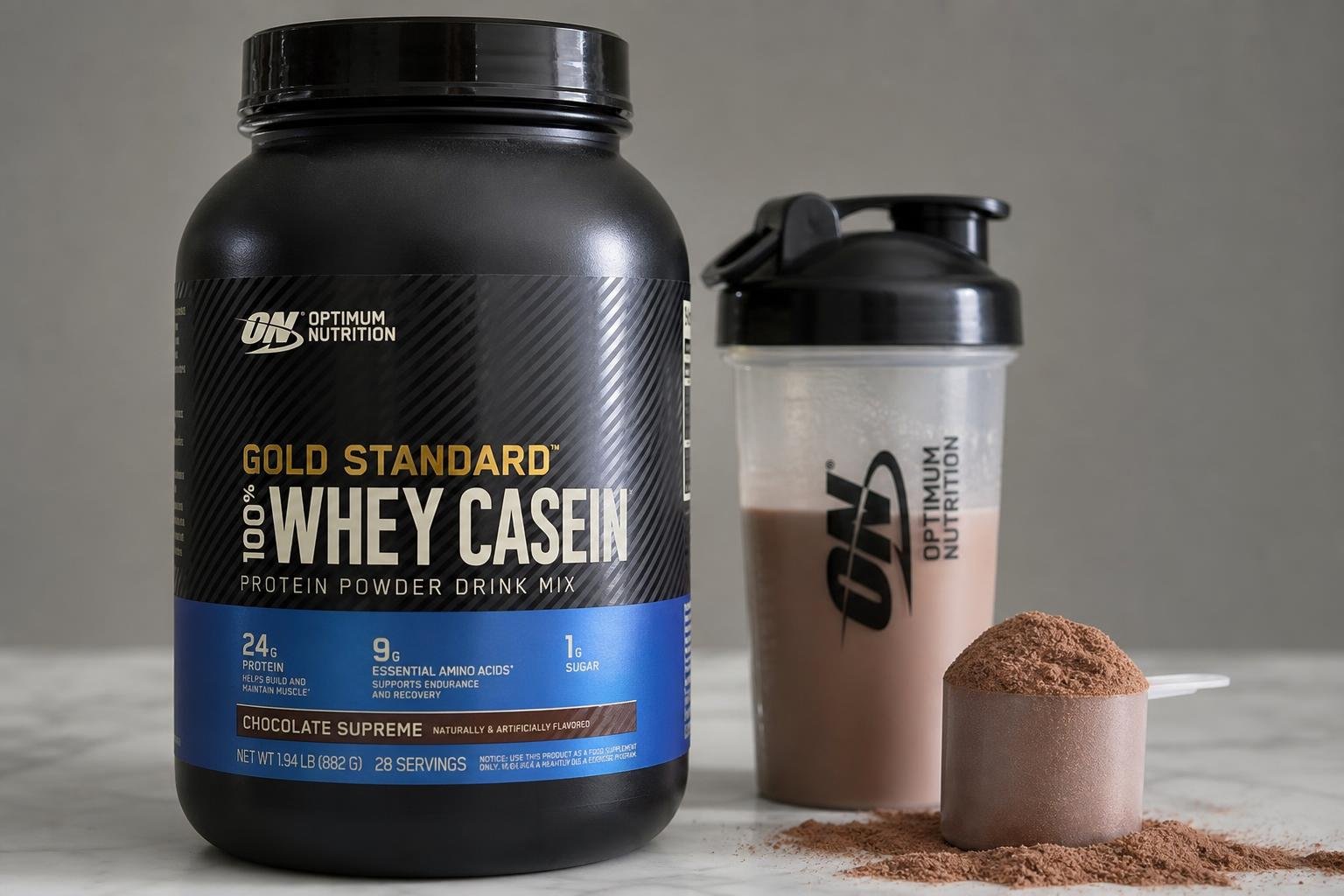
For most beginners, whey protein is the obvious starting point. It delivers all nine essential amino acids and supports recovery well after resistance training.
- Whey protein concentrate contains 70–80% protein, keeps some lactose and fat, and is usually the most cost-effective whey protein powder for building lean muscle on a budget.
- Whey protein isolate goes through extra filtration and reaches 90–95% protein by weight, with most lactose removed. That makes whey isolate a strong option after training or for anyone with mild dairy sensitivity.
- Whey protein hydrolysate is pre-digested for very fast absorption, which suits hard sessions where rapid amino delivery is the priority.
Each serving generally provides 21g to 25g of protein from around 30g of powder. Alongside this, whey is rich in amino acids such as leucine, isoleucine and valine, plus glutamine, which supports muscle repair and recovery.
Some formulas combine several whey forms in one whey protein powder. In practice, a protein blend can give you both fast and steadier amino release, sitting neatly between entry-level whey protein concentrate and a purer protein isolate.
Plant-based, casein protein and clear whey protein options
Once whey is covered, the next choice comes down to preference and digestion. Vegan protein powder, casein and clear whey each solve a different problem.
A quality vegan protein powder can be highly effective for muscle gain. A formula built around pea protein isolate and rice protein provides 23g of protein per serving, with a complete amino profile comparable to whey, plus vitamin B12 and fibre. If you avoid dairy, vegan protein is often the right choice when you still want reliable support for lean muscle and recovery.
Casein digests far more slowly than whey. That makes casein useful in the evening, when a steadier release of amino acids can support overnight recovery.
By contrast, clear whey uses an isolate base to create a lighter, juice-style drink. If thick shakes put you off, this format is often easier to drink consistently.
Mass gainers and blended powder formats
From there, a gainer sits in a separate category. It is designed for higher calorie intake when food alone does not cover your surplus.
A product like the high calorie gainer from Mutant delivers 1,100 kcal and 50g of protein per serving. It combines a multi-source protein blend with low-GI carbohydrates, MCT-rich lipids and a proprietary absorption matrix.
That is useful when whole food alone does not create enough surplus for muscle growth. A useful benchmark here: if your training is consistent and body weight still refuses to move, a mass gainer can close that gap efficiently.
Premium formulas may use several protein sources, including whey isolate and milk proteins, while excluding weaker sources to raise biological value. Alongside this, the broader ingredient profile can make them more suitable when recovery and calorie intake need support at the same time.
How to choose a whey protein powder for muscle gain
Choosing the right whey protein powder comes down to more than branding. Your budget, digestion, calorie needs, and training target all matter, which is why no single protein powder fits every beginner.
Matching whey protein type to your goals and budget
Start with what you need most: value, speed of digestion, or lower lactose. From there, the difference comes down to format.
- Budget-conscious beginners usually do well with whey concentrate. It gives you reliable protein at the lowest cost and supports steady muscle gain without unnecessary extras.
- Recovery after training often points to whey isolate or another fast-digesting isolate option such as hydrolysate. Both tend to contain less fat and carbohydrate per serving, which helps keep your post-workout macros tight.
- Hard-gainers needing more calories are often better served by a gainer. These formulas can provide 1,000 kcal or more per serving, with protein, low-GI carbohydrates, and healthy fats in one powder.
Taste and mixability matter: if you enjoy the flavour and it mixes cleanly, you will use it every day.
Nutritional profile, taste and allergen checks
Check the protein content per serving alongside total calories, fat, and sugar: a whey protein or whey protein powder delivering 20–25g of protein with low carbohydrate and fat is usually a useful benchmark here for lean muscle, while higher-carb products make more sense when you need a calorie surplus.
Alongside this, read the allergen label properly. Some products contain milk, soy, or gluten, and that matters as soon as digestion or dietary restrictions become part of the equation.
Gluten-free and sugar-free options exist, including products sweetened with stevia: a practical fit when you want tighter calorie control without giving up the convenience of daily whey.
Best protein powder uk for muscle gain as a beginner
The UK supplement market is crowded. That makes choosing the best protein powder uk for muscle gain less about hype and more about picking a format that matches your training, budget, and digestion.
For most beginners, a simple whey protein powder with clear labelling and sensible protein content is the practical starting point. Reliable names such as Optimum Nutrition, Dymatize, and Muscletech remain popular in the UK because their formulas are consistent and easy to fit into a daily routine.
Why whey protein powder suits most UK beginners
It is well researched, widely available, and useful across several goals: lean muscle gain, body recomposition, and recovery after resistance training.
The difference comes down to what whey offers beyond the headline protein number. Alongside strong amino acid content, whey includes bioactive compounds such as lactoferrin, beta-lactoglobulin, alpha-lactalbumin, and immunoglobulins, which are largely absent from many plant-based alternatives and may support immune function and gut health alongside muscle repair.
That makes standard whey concentrate a strong starting point for most people. It usually covers the basics well without making your nutrition plan more complicated than it needs to be.
Protein powder isolate and daily targets for muscle growth
A quality whey protein powder that provides 21g to 25g of protein per 30g serving fits neatly into most training days. It also helps you reach the intake linked with better muscle growth and strength gains.
For beginners, the usual target sits at 1.6 to 2.2g of protein per kilogramme of body weight each day. That range is supported by a meta-analysis of 49 studies showing significant improvements in muscle size and strength when protein supplementation is combined with resistance training.
As soon as post-workout speed and a leaner nutrition profile matter more, whey protein isolate starts to make sense. A whey isolate digests faster than many heavier options, which is why it is often used for recovery after lifting.
A useful benchmark here: at 75kg body weight, you would aim for roughly 120g to 165g of protein per day. Many beginners do not reach that from food alone, and that is where a scoop of powder can help close the gap without forcing another full meal.
| Powder type | Protein per serving | Best used for | Approx. calories |
| Whey concentrate | 21–23g | General muscle building, budget | 110–130 kcal |
| Whey isolate | 23–25g | Post-workout recovery, lean gain | 100–115 kcal |
| Vegan protein blend | 23g | Plant-based muscle gain | ~110 kcal |
| Mass gainer | 50g | Calorie surplus, hard-gainers | 1,100 kcal |
Value, formats and trusted UK supplement brands
From there, value becomes a practical consideration. Larger tubs, from 908g up to 2,300g and beyond, usually give better cost per serving if you plan to use protein powder daily for muscle gain or recovery.
Those bigger formats can provide anywhere from 18 to more than 272 servings per container. That matters if you are comparing a standard whey concentrate, a premium whey isolate, or a specialist formula against smaller trial packs that look cheaper upfront but cost more over time.
By contrast, a gainer only suits a narrower group. A mass gainer is useful when you struggle to eat enough for a calorie surplus, while vegan protein works better if you avoid dairy and still want a convenient route to lean muscle and steady muscle growth.
Whole-food sources, meat, eggs, dairy, and legumes, should still provide the bulk of your daily protein. Alongside this, a scoop of whey or a vegan blend can top up what food misses.
Recommended products

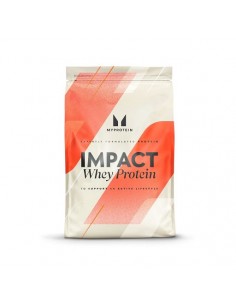

Which protein powder to buy for beginners in the UK
In practice, the best starting point is a simple formula that fits your diet, your training, and how you actually plan to use it.
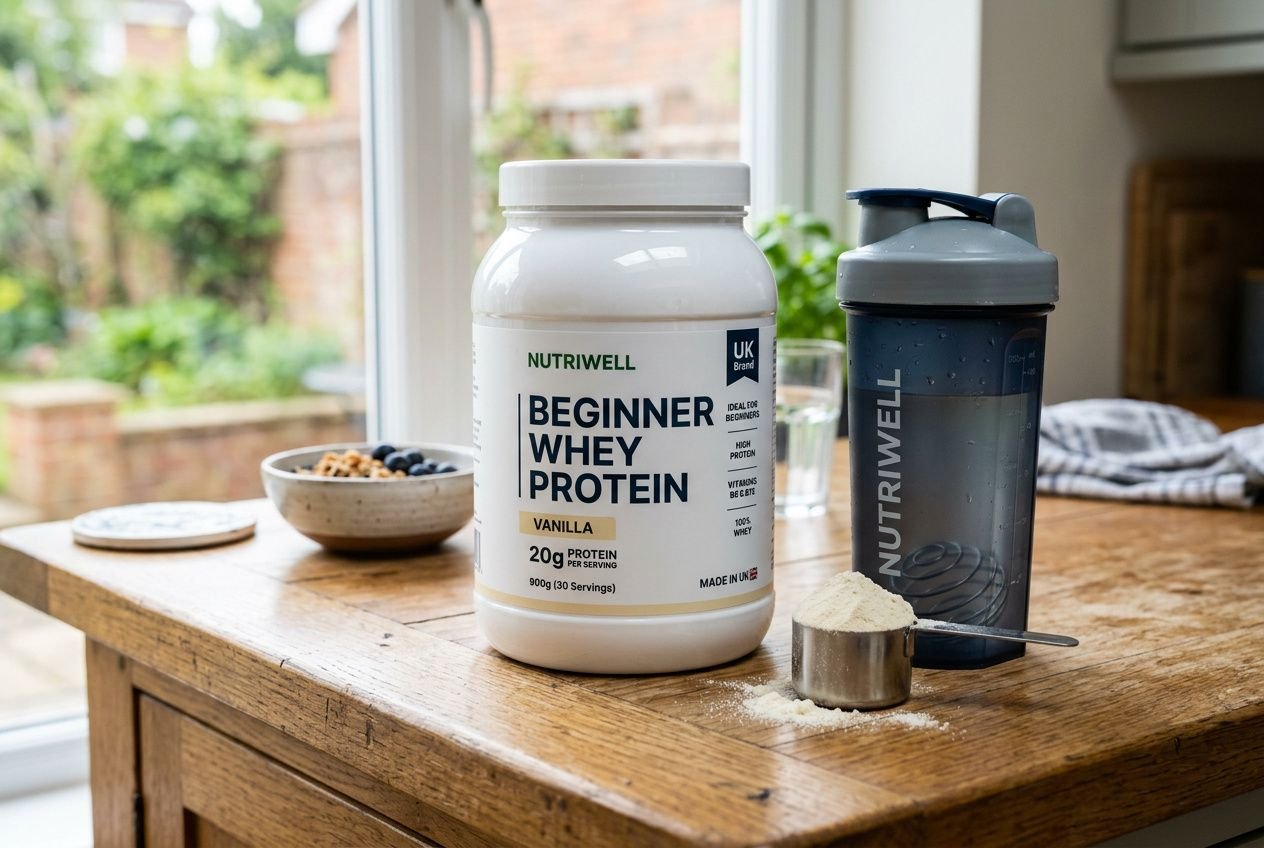
Clear whey and mass gainer powder for beginners
The difference comes down to one thing: whether you need extra protein or extra calories. Once that is clear, the shortlist becomes much easier to manage, especially if your goal is to build muscle and support steady gains in muscle mass.
- Whey concentrate is the standard place to begin: affordable, effective, and easy to find in a wide range of flavours with solid protein per serving.
- Whey isolate suits you if you have mild lactose sensitivity or want a leaner, faster-digesting option after training.
- Clear whey uses the same isolate base but drinks more like juice than a thick shake, which makes it a practical alternative if a classic protein shake feels too heavy.
- Gainer powder (for example, Mutant Mass 6800g) provides 1,100 kcal and 50g of protein per serving from a ten-protein blend. That's where a gainer earns its place when food intake alone is not enough to create the calorie surplus needed to build muscle.
Alongside these, a protein blend can help if you train twice a day or struggle to cover intake between meals. Different absorption speeds from mixed amino and protein sources can make that format useful without making your routine more complicated.
Vegan protein powder and plant-based alternatives
A vegan protein combining pea protein isolate (PISANE C9) and rice protein provides 23g per serving, a complete amino acid profile, added vitamin B12, fibre, and natural stevia sweetening. It is the right choice when you want vegan protein with strong nutritional coverage and a cleaner formula.
Pea protein brings BCAAs, lysine, and arginine, while rice protein is easy to digest and absorbs quickly. Together, they come close enough to whey on amino acid balance to support muscle growth and training progress in a plant-based diet.
That gluten-free, sugar-free profile keeps calories low and removes two common dietary concerns in one formula.
Starting doses, formats and practical usage tips
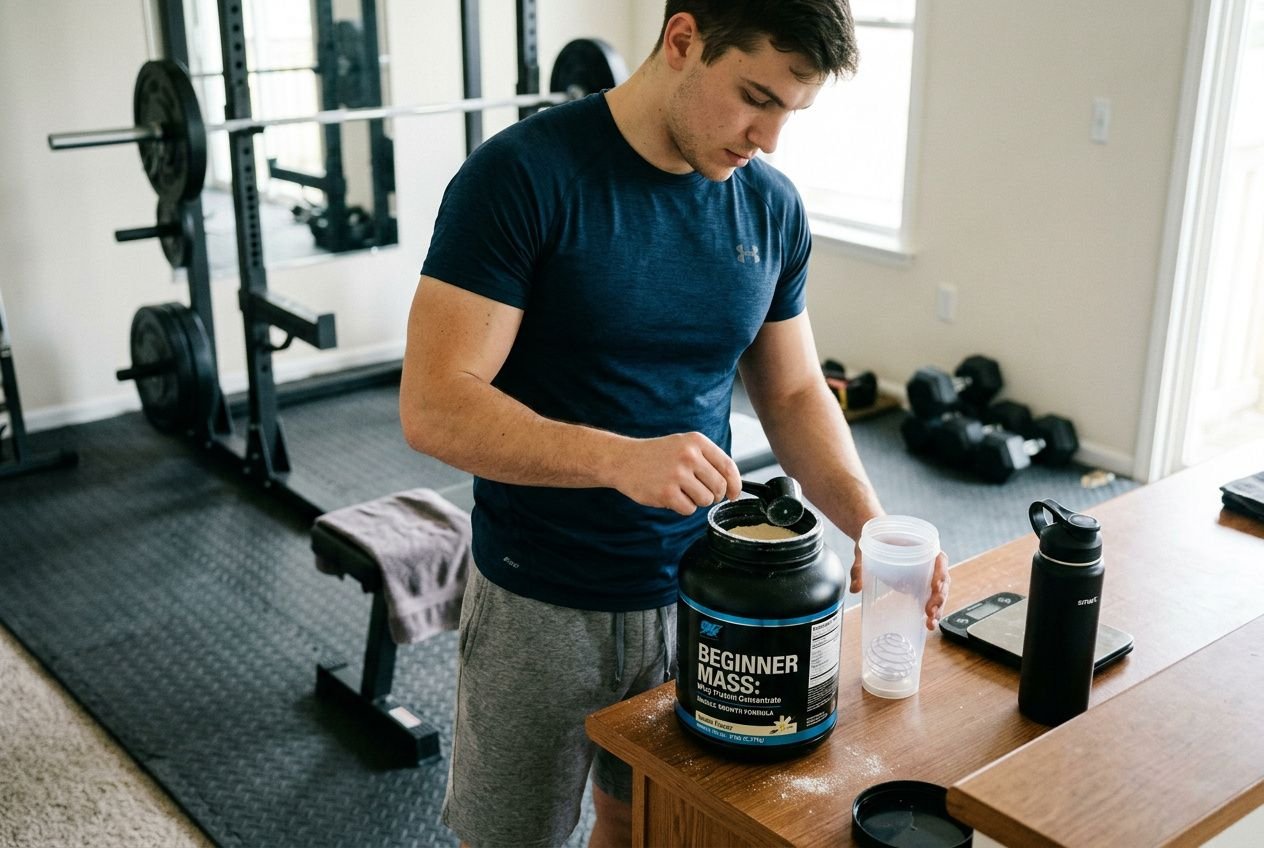
Once you have the format right, the routine should stay simple. One serving a day, used consistently alongside resistance training, is enough for most beginners.
- Timing: use one serving after training or between meals to raise daily protein intake without replacing whole foods.
- Preparation: mix two scoops of powder with 350–500ml of water or milk, or use four scoops with 750–1,000ml if you are using a gainer.
- Versatility: add protein powder to oats, yoghurt, or smoothies if drinking the same protein shake every day becomes repetitive.
A useful benchmark here is pack size: start with 908g to test flavour and tolerance first. As soon as you know a formula suits you, moving to 2,270g or more usually lowers the cost per serving and keeps your protein powder to buy for beginners practical over the long term.
Do protein supplements actually work for muscle gain?
Short answer: yes, when you pair them with resistance training and adequate sleep. The evidence for whey protein is among the strongest in sports nutrition, and its safety record is just as solid.
What whey protein does for muscle recovery and growth
That evidence matters because the role of whey protein is clear. A meta-analysis covering 49 studies found significant improvements in muscle size and strength in healthy adults using protein supplements alongside resistance training.
The mechanism is straightforward: training creates micro-tears in muscle fibres, and whey protein supplies the amino acids needed to repair that tissue and build it back stronger.
- Muscle protein synthesis: leucine in whey protein activates the mTOR pathway, the main signal for repair and growth after training.
- Reduced soreness: BCAAs and glutamine naturally present in whey can help reduce delayed onset muscle soreness, supporting recovery between sessions.
- Lean muscle preservation: during fat-loss phases, adequate protein helps protect lean muscle from being broken down for energy, and whey is an efficient way to cover that need.
- Bioactive compounds: lactoferrin, alpha-lactalbumin, and immunoglobulins in whey may support immune function and gut health alongside basic protein delivery.
Protein powder is not a shortcut. It is a practical way to close the gap between your food intake and your daily high-protein target. Training, sleep, and consistency still do the real work; the powder simply makes sure your body has enough amino acids available to respond.
Whey protein safety, daily targets and realistic expectations
Whey protein has an excellent safety profile, and concerns linking normal protein intake to kidney damage are not supported by the evidence. Worth noting: protein intake has also been shown to help protect against bone loss rather than cause it.
For most active beginners aiming for lean muscle and steady muscle gain, 1.6 to 2.2g of protein per kilogram of body weight per day is an effective range. Adults should avoid going beyond twice the recommended daily intake, but reaching that target through whole foods and one serving of powder is considered low risk.
From there, the right choice when using protein supplements is to treat them as support, not replacement. Meat, fish, eggs, dairy, nuts, and legumes bring fibre and micronutrients that protein powder cannot fully replicate. Start with one of the simpler supplements, use it consistently for several weeks alongside structured training, and judge progress before adding anything else.
Frequently asked questions
What is the best protein powder for muscle gain as a UK beginner?
For most UK beginners, a straightforward whey protein is the place to start: either whey concentrate or whey isolate from a reputable brand. Both typically provide 21–25g per serving, a complete amino acid profile, and reliable support for muscle gain alongside regular training.
By contrast, if you avoid dairy, a pea-and-rice vegan protein is a solid alternative and can deliver comparable results. For harder gainers who struggle to eat enough, a gainer can make sense: around 50g of protein and more than 1,000 kcal per serving in powder form.
How much protein powder should a beginner take per day?
For most people, one serving of protein powder per day is enough at the start. In practice, it works best after training or as a mid-meal option when food intake is falling short.
Your daily protein target matters more than the number of supplements you use: aim for 1.6g to 2.2g per kilogramme of body weight from food and powder combined. For a 75kg beginner, that comes to roughly 120–165g per day, and once you reach that consistently, extra servings tend to add little.
Is whey protein safe for beginners with no supplement experience?
Yes. Whey protein is one of the most studied supplements in sports nutrition, with a well-established safety record for healthy adults.
In context, concerns about kidney strain relate to very excessive intake, well beyond what a beginner would normally use. If you have a kidney condition, or if you are pregnant or breastfeeding, speak to your GP first.
Alongside this, if you want lower lactose and a leaner option, whey isolate can suit you better than whey concentrate.
Share this article: