Shopping Cart
Plant-based or whey protein: which protein powder wins?


Choosing between plant-based or whey protein depends on your fitness goals, dietary restrictions, and lifestyle preferences. This guide compares both protein types across digestion, weight loss, and muscle mass to help you make an informed decision.
Whey protein vs plant protein: amino acids and nutrition compared
Understanding the nutritional differences between whey and plant-based protein is essential when choosing the right supplement. Both options deliver solid protein content, but their amino acid profile and micronutrients can differ significantly, and those differences can have a real impact on your overall health.
Complete amino acid profiles: whey protein vs plant protein
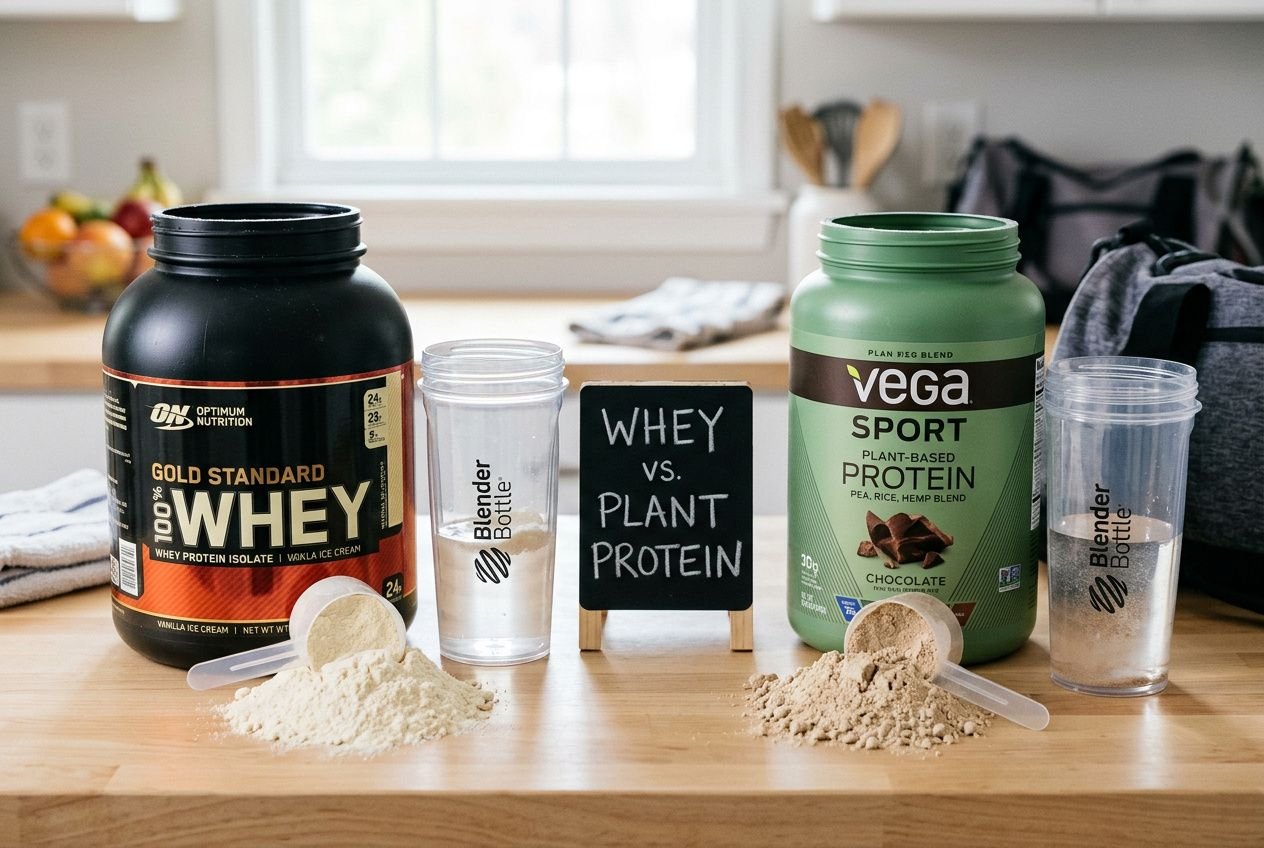
Whey protein contains all nine essential amino acids, making it a complete protein with a high biological value. When it comes to whey protein vs plant protein for muscle building, whey naturally offers excellent completeness right out of the bag. Most single-source plant protein options, on the other hand, tend to fall short on one or more essential amino acids.
- Whey's complete profile: All essential amino acids are naturally present, effectively supporting muscle recovery and helping you build and maintain muscle mass.
- Plant protein blends: Combining different sources, such as pea and brown rice, can create an amino acid profile that closely rivals whey, making plant-based protein powder a genuinely competitive option.
- Soy protein advantage: As a complete protein from plant sources, soy protein covers all your essential amino acid needs while also providing high glutamine levels, which are great for gut health.
A typical serving of plant-based protein delivers around 20 grams of protein, along with higher amounts of iron, B vitamins, and dietary fiber. Whey protein powder, by comparison, provides roughly 24 grams per serving at just 120 calories, a pretty efficient option for hitting your goals.
Is plant protein healthier than whey for overall nutrition?
Answering the question is plant protein healthier than whey really comes down to looking at the bigger nutritional picture. Plant-based protein options bring fiber, prebiotics, and antioxidants to the table, all of which support immune health and digestion on a daily basis. Whey protein, meanwhile, is rapidly absorbed and also provides a useful dose of calcium for bone health.
A standard serving of whey protein powder typically delivers 5.5 grams of BCAAs and 4 grams of glutamine, both valuable for post-workout recovery. Plant-based protein alternatives often contain less leucine, but they make up for it with a richer micronutrient profile that dairy-based supplements simply can't match.
| Nutrient | Whey Protein (30g) | Plant-Based Protein (30g) |
| Protein content | 24g | 20–21g |
| Calories | 120 | 110–130 |
| BCAAs | 5.5g | 3–4g (varies) |
| Iron | Lower | Higher |
| Fiber | Minimal | 1–3g |
Research suggests that when total protein and BCAAs are matched, both whey and plant-based protein can produce similar gains in muscle mass. In the end, the best choice comes down to your personal health goals, how your body handles digestion, and your own dietary preferences.
Leucine, BCAAs and muscle protein synthesis: what the research says
Leucine plays a direct role in triggering muscle protein synthesis, and whey protein naturally contains a much higher concentration of it than most plant protein sources. Studies have shown that an unfortified plant-based protein powder can produce a somewhat weaker muscle-building response compared to whey.
That said, fortifying plant protein with leucine can effectively close this gap for active individuals. When properly formulated, plant-based protein blends can match whey protein isolate in terms of muscle protein synthesis rates, proving that how a product is made matters just as much as what it's made from.
A quality protein powder should supply 20–30 grams of protein and 6–15 grams of essential amino acids per serving. Both high-quality whey protein powder and well-formulated plant-based and whey protein alternatives can comfortably meet these benchmarks. For reliable results, consider trying a gold standard whey built around protein isolate for fast, efficient delivery.
Plant Based or Whey Protein Powder for Muscle Growth
Picking the right protein powder means considering absorption rates, amino acid delivery, and how your training schedule looks. Both plant-based or whey protein for muscle growth can deliver great results when used correctly. The key is making sure the quantity and quality per serving align with your specific workout routine.

Absorption Speed and Timing for Muscle Recovery
Whey protein absorbs quickly, around 10 grams per hour, supplying amino acids within just 30 minutes to support fast muscle repair. This rapid uptake plays a significant role in your muscle recovery windows after intense exercise. Plant-based protein, on the other hand, digests much more slowly, releasing nutrients gradually over a longer period.
- Whey's rapid delivery: Fast absorption makes whey protein powder an excellent choice for post-workout use, sparking immediate protein synthesis within that critical 30-minute window.
- Plant protein sustained release: Slower digestion gives plant protein an advantage when it comes to prolonged nutrient availability, helping support muscle maintenance consistently throughout the day.
- Casein's overnight advantage: Slow-absorbing casein is perfectly suited for bedtime consumption, delivering steady nourishment to your muscles while you sleep and recover.
Essential amino acid levels in the blood tend to remain lower over four hours with plant options compared to whey. For this reason, those using plant-based protein need to be more strategic with timing and may require higher daily intakes to achieve equivalent muscle growth results.
Best Protein Powder Picks for Muscle Building Goals
The top supplements always combine a complete amino acid profile with convenient macro ratios. In discussions like plant based or whey protein reddit threads, experienced lifters consistently emphasize matching total amino acids per serving. You might explore plant-based protein blends that offer comprehensive nutrient delivery alongside whey protein supplement options for maximum absorption flexibility.
Optimum Nutrition's Gold Standard delivers 24 grams of protein and 5.5 grams of BCAAs per serving. Weider's formula cleverly blends whey, casein, and soy to provide both rapid and sustained nutrient delivery, supporting muscle growth while also promoting fullness for a range of dietary lifestyles.
What Reddit and Research Agree On for Muscle Gain
Both online fitness communities and scientific research point to the same fundamental principle when it comes to muscle development: your specific protein source matters far less than your daily consistency and overall nutrient intake. Athletes who consistently hit their macro goals build comparable muscle mass whether they use whey or a well-formulated plant protein.
Whey protein isolate remains the gold standard for post-workout shakes thanks to its incredibly fast digestion. A fortified protein isolate from plant sources can trigger equivalent synthesis rates when properly balanced. The real difference comes down to timing flexibility, not overall effectiveness for muscle growth.
Recommended products


Plant Based or Whey Protein Powder for Weight Loss and Lifestyle Fit
Successful weight management comes down to controlling your appetite, maintaining a calorie deficit, and preserving your muscle mass. Both whey and plant-based protein offer excellent satiety and metabolic benefits. They work most effectively when paired with a reduced-calorie diet and consistent resistance training.
Which Protein Powder Best Supports Weight Loss Goals?
A diet rich in protein content helps you feel fuller for longer, which can reduce the urge to snack and makes sticking to your calorie goals easier. Both whey protein powder and plant protein powders contribute to this feeling of satiety. For the best outcome, spread your protein intake throughout the day across several meals to maximize muscle retention.
- Whey's Calorie Efficiency: Low-fat whey protein isolate delivers a high amount of protein for very few calories. This allows for a strict calorie reduction while protecting the muscle mass you've worked hard to build.
- Plant-Based Appetite Support: Many natural plant-based protein powders include added fiber. This boosts the feeling of fullness beyond the protein content alone, providing support for weight management and promoting digestive comfort.
- Lean Mass Preservation: Consuming enough protein powder helps shield your muscle tissue during weight loss. This is crucial for maintaining your metabolic rate and achieving a more favorable body composition.
A high-quality whey protein powder with natural sweeteners is an excellent choice for supporting your weight loss journey. It helps sustain your training performance and recovery even when you are consuming fewer calories.
Digestibility, Allergens and Dietary Restrictions to Consider
Your experience with whey protein powder digestibility depends on the manufacturing process and your individual tolerance to lactose. Fortunately, whey protein isolate contains significantly less lactose than concentrate, which improves its overall digestibility. If dairy causes bloating or discomfort, plant-based protein alternatives often provide better gastrointestinal comfort for daily use.
- Lactose Intolerance Considerations: Plant-based proteins are naturally dairy-free, making them an ideal choice for individuals who are lactose-intolerant or following a vegan diet and wish to avoid any animal-based protein source.
- Allergen Profiles: Whey protein can sometimes trigger allergies related to milk, soy, gluten, or nuts. Conversely, plant proteins like pea protein or rice blends tend to carry a lower risk of causing allergic reactions.
- Soy Protein Allergies: Although soy protein is a complete protein with a robust amino acid profile, it can still trigger allergic responses in some people. For these individuals, a pea protein isolate serves as a safer alternative with a great branched-chain amino acid (BCAA) content.
- Allergen-Free Formulations: Plant-based protein options that use single-source ingredients improve accessibility for those with food sensitivities. It's wise to look for products that are certified to be free from cross-contamination.
People with dairy sensitivities or those following a vegan lifestyle can greatly benefit from a plant-based protein. It provides excellent muscle support without the stomach distress that might otherwise disrupt your daily routine.
Environmental Impact and Quality Criteria for Choosing Wisely
The production of whey protein generates considerably more greenhouse gases than its plant-based protein counterparts. This underscores a major sustainability difference between animal-based protein and plant options. The production of plant-based protein typically requires less water, land, and carbon across its entire supply chain.
Always check for third-party testing, such as NSF certification, to ensure your protein powder is both pure and accurately labeled. Both whey and plant-based protein are effective at preserving muscle mass during a calorie deficit, so the best choice ultimately depends on your personal dietary needs and values. Furthermore, plant protein leucine fortification research demonstrates that with high-quality formulation, plant sources can achieve performance levels comparable to dairy.
Frequently Asked Questions
The choice between plant protein and whey protein depends on your personal goals, as neither is objectively better. Whey protein is renowned for its quick digestibility and complete amino acid profile, making it excellent for fast muscle recovery after a workout.
On the other hand, plant-based protein offers additional fiber and nutrients, along with significant sustainability benefits. It is also highly effective for muscle growth when you consume enough of it. Research indicates that total protein intake is more critical for muscle building than the source, so your decision may come down to taste, potential allergies, and lifestyle preferences.
One of the main downsides to using a plant-based protein powder is its slower rate of digestibility compared to whey, which might not be ideal for immediate muscle recovery after exercise.
In addition, unless it's a carefully blended formula, some plant protein powders might not provide a complete amino acid profile on their own. If you choose a plant-based protein, it's essential to ensure it contains sufficient leucine to optimize muscle growth.
Historically, plant-based protein powder was often more expensive and less tasty than whey protein. However, modern formulations have greatly improved, offering better flavors and cleaner ingredient lists.
Some studies suggest that consuming whey protein can contribute to heart health by supporting healthy cholesterol levels. It contains beneficial compounds that offer advantages extending beyond muscle recovery.
That said, relying solely on whey protein is not enough to significantly reduce LDL cholesterol over the long term. Meaningful improvements require broader lifestyle adjustments, including a balanced diet, regular exercise, and effective stress management.
Individual responses to whey protein can vary based on factors like genetics and overall health. If you have concerns about cholesterol, it's always wise to seek advice from a healthcare professional.
Share this article: