
Shopping Cart
Meal Replacement Shakes: What They Are, How They Work and When to Use Them


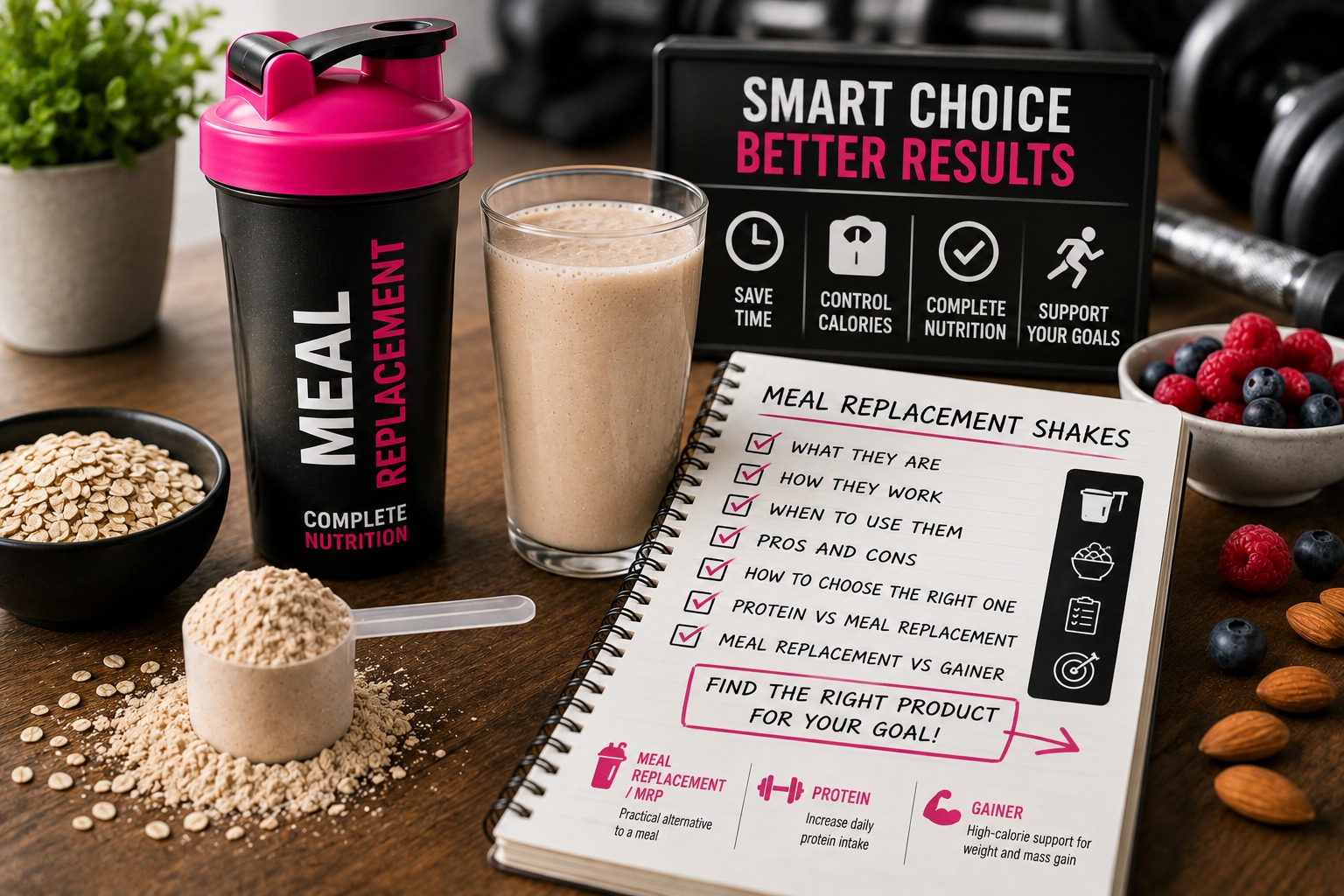
Meal replacement shakes, often referred to as MRPs (Meal Replacement Products), are designed to provide a practical alternative to a conventional meal by combining several nutrients in a controlled serving.
Unlike a standard protein shake, their purpose is not simply to increase protein intake. A meal replacement typically combines protein, carbohydrates and fats and may also provide fibre, vitamins and minerals depending on the formulation.
They can be useful when preparing or eating a conventional meal is difficult, during busy working days, while travelling or as part of a structured nutrition plan. However, a meal replacement should not automatically be considered nutritionally identical to every meal made from regular foods.
What is a meal replacement?
A meal replacement is a product formulated to replace a conventional meal on certain occasions. In sports nutrition, the abbreviation MRP is commonly used for Meal Replacement Product.
Most are sold as powders that can be mixed with water or milk, although ready-to-drink products and other formats are also available.
The basic idea is to provide a more complete nutritional profile than a conventional protein supplement while keeping preparation quick and portion size easy to measure.
What does a meal replacement shake contain?
There is no single formula used by every manufacturer. Depending on the product, a meal replacement may contain:
- protein from whey, casein, milk, soy, pea or other sources;
- carbohydrates in varying amounts;
- fats from different lipid sources;
- dietary fibre;
- vitamins and minerals when included in the formulation;
- additional ingredients used for flavour, texture or specific nutritional characteristics.
This is why two products marketed as meal replacement shakes can have very different nutritional values. The actual nutrition label matters more than the words printed prominently on the front of the package.
Meal replacement vs protein shake: what's the difference?
A meal replacement and a protein shake are not the same thing.
A protein shake is primarily designed to provide protein. Depending on the formula, it may contain small amounts of carbohydrates and fat, but its main purpose remains protein supplementation.
A meal replacement is intended to provide a broader nutritional profile that is closer to a meal, normally combining multiple macronutrients and sometimes fibre, vitamins and minerals.
| Feature | Meal Replacement | Protein Shake |
|---|---|---|
| Main purpose | Practical alternative to a meal | Increase protein intake |
| Protein | Yes | Main component |
| Carbohydrates | Usually included | Variable, often relatively low |
| Fats | Usually included | Often relatively low |
| Fibre | Frequently included | Not necessarily included |
| Vitamins and minerals | May be an important part of the formula | Usually not the primary purpose |
| Typical use | Replace a meal when convenient | Supplement dietary protein |
Meal replacement vs mass gainer: what's the difference?
Meal replacements and mass gainers can look similar because both may contain substantial amounts of protein and carbohydrates. Their intended purposes, however, are different.
A mass gainer is generally formulated to provide a large amount of calories in a convenient serving. It is commonly used by people who find it difficult to consume enough food to maintain the calorie surplus required for weight gain.
A meal replacement is usually designed around a more balanced and controlled serving rather than maximising calorie intake.
The relevant question is therefore not which product is universally better, but which type of product matches your nutritional goal.
When can a meal replacement shake be useful?
The main advantage of an MRP is convenience. It can be particularly useful when the realistic alternative would be skipping a meal entirely or repeatedly choosing something that does not fit your nutritional plan.
Typical situations include:
- busy working days;
- short lunch breaks;
- travel and long journeys;
- days spent away from home;
- situations where a measured calorie intake is useful;
- structured nutrition plans that include the controlled replacement of certain meals.
Convenience does not mean that every meal needs to be replaced by a shake. An MRP is best viewed as a tool that can solve a specific practical problem.
Do meal replacement shakes help you lose weight?
A meal replacement shake does not automatically cause weight loss.
Body weight is influenced over time by energy balance. A meal replacement can make calorie control easier because each serving provides a known amount of energy and nutrients.
For example, replacing an unpredictable high-calorie lunch with a measured serving may help someone follow a planned calorie intake more consistently.
But if total daily calorie intake remains above energy requirements, simply adding or using a meal replacement does not guarantee weight loss.
Why are meal replacements used in calorie-controlled diets?
One practical challenge of dieting is controlling portions consistently. Restaurant meals, snacks and meals prepared without measuring ingredients can vary considerably in calories.
A meal replacement provides a predefined serving, making its energy content easier to calculate.
This can simplify a calorie-controlled diet for some people, but results still depend on total energy intake, overall food quality and long-term adherence.
Are meal replacement shakes filling?
Satiety is influenced by several factors rather than calories alone.
The amount of protein and fibre, the volume of the prepared drink and its overall macronutrient composition can all affect how filling a product feels.
Texture may also matter. Some meal replacement powders produce a thicker shake than a conventional whey protein drink.
Individual responses vary, however. Some people find a liquid meal convenient and satisfying, while others feel more satisfied after eating solid foods.
Are meal replacements useful for athletes?
A meal replacement is not necessarily a dedicated pre-workout or post-workout supplement. Its main purpose is to provide a practical alternative to a meal.
It can nevertheless be useful for athletes who spend long periods away from home, have demanding schedules or struggle to organise one of their daily meals.
In these circumstances, an MRP can solve a logistical problem while more specific products such as protein supplements or carbohydrate products can still be used separately when appropriate.
Can you use a meal replacement before training?
It depends on the product's composition, serving size and how much time remains before exercise.
A formula containing protein, carbohydrates, fats and fibre may digest differently from a simple protein shake.
If you plan to consume a meal replacement before training, consider your individual digestive tolerance and allow enough time before an intense workout, particularly when using a full serving.
Can you use a meal replacement after training?
Yes, particularly when your post-workout period coincides with a meal that would otherwise be difficult to organise.
A product containing both protein and carbohydrates may fit naturally into a post-training meal plan.
If you are going to eat a normal balanced meal shortly after training, however, there may be little reason to add a meal replacement as well.
How do you choose a good meal replacement shake?
There is no perfect formula for everyone. A product chosen for a calorie-controlled diet may have very different nutritional characteristics from one selected by an athlete with high energy requirements.
When comparing products, check:
- calories per serving;
- protein per serving;
- the amount and sources of carbohydrates;
- the amount and sources of fat;
- fibre content;
- the presence and quantities of vitamins and minerals;
- the actual serving size;
- the number of servings per container;
- the protein sources used;
- allergens and ingredients that may not suit your dietary requirements.
How much protein should a meal replacement contain?
There is no universal amount because an appropriate serving depends on the rest of your diet, body size, activity level and goals.
For physically active people, it can be useful to choose a product that provides a meaningful amount of protein relative to its total calorie content.
Protein should not be the only criterion, however. If your only objective is to obtain as much protein as possible with minimal carbohydrates and fats, a dedicated protein supplement may be more appropriate than a meal replacement.
Should a meal replacement contain fibre?
Fibre is an important component of the diet and can contribute to both nutritional quality and satiety.
When comparing meal replacement products, fibre content is therefore worth considering alongside protein, carbohydrates, fats and micronutrients.
More is not always better in every situation. Very high fibre intake immediately before training, for example, may be uncomfortable for some people.
Meal replacement or regular meal: which is better?
When time and circumstances allow, a varied diet based primarily on regular foods provides not only macronutrients but also a broad range of micronutrients and other food components.
A meal replacement offers different advantages: convenience, portability, predictable nutritional values and quick preparation.
Rather than asking which is universally better, it is more useful to consider an MRP as a practical option for situations where preparing or eating a conventional meal is difficult.
Can you use a meal replacement every day?
This depends on the specific product, your overall diet and how frequently meals are being replaced.
Using a meal replacement occasionally because of work or travel is very different from building most of your daily diet around replacement products.
If meal replacements become a major part of a highly restrictive or very low-calorie diet, particularly over an extended period, the overall nutrition plan should be assessed with an appropriately qualified professional.
Who may find meal replacement shakes useful?
Meal replacements may be particularly practical for:
- people who occasionally have little time to prepare a meal;
- frequent travellers;
- people who want a serving with easily measurable nutritional values;
- athletes managing nutrition during long and demanding days;
- people following an appropriate plan that includes occasional meal replacement.
When might a meal replacement not be the right choice?
A meal replacement may offer little benefit when it is purchased simply because it is perceived as a shortcut to weight loss or as automatically healthier than food.
People with allergies, intolerances or specific dietary requirements should also examine ingredients carefully rather than assuming that every MRP will be suitable.
When medical conditions or therapeutic diets are involved, nutritional choices should be discussed with the relevant healthcare professional.
How to read a meal replacement nutrition label
Start by checking whether the nutrition information refers to 100 grams, one serving or the product after preparation.
This matters because preparing the powder with milk rather than water can substantially change the calories, protein, carbohydrates and fat in the final drink.
Next, examine the ingredient list and identify the main protein, carbohydrate and fat sources.
Finally, compare products using equivalent serving sizes. A larger scoop does not necessarily mean that the product is more nutritionally concentrated.
Meal replacements and protein: ask what you actually need
Before buying an MRP, it is useful to identify the problem you want the product to solve.
Ask yourself:
- which meal am I trying to replace?
- why is eating a regular meal difficult at that time?
- how many calories and how much protein do I need?
- how long will it be until my next meal?
- do I really need a meal replacement, or do I simply need extra protein?
This distinction can prevent one of the most common mistakes in sports nutrition: buying a product first and deciding what it is supposed to do afterwards.
Meal replacement vs protein shake vs mass gainer: quick guide
- Meal Replacement: choose it when you need a practical, portion-controlled alternative to a meal.
- Protein Shake: choose it when your main objective is to increase protein intake.
- Mass Gainer: choose it when obtaining enough calories for weight gain is the main challenge.
The three product categories can contain some of the same ingredients, but they are designed to solve different nutritional problems.
Find the right nutrition product for your goal
If a Meal Replacement fits your needs, explore the Meal Replacement and MRP range at BodyNutrition.
If your priority is simply increasing daily protein intake, browse our protein supplements. If you instead need a higher-calorie product designed to make reaching a calorie surplus easier, see our mass gainers.
Conclusion: a meal replacement is a tool, not a shortcut
A meal replacement shake can be a convenient solution when preparing or eating a conventional meal is difficult. Compared with a standard protein shake, an MRP generally provides a broader combination of macronutrients and may also include fibre, vitamins and minerals.
It does not automatically cause weight loss, nor is it necessary for someone who already manages their diet effectively with regular foods.
The best choice starts with the nutrition label, your individual requirements and the reason you need the product. Used appropriately, a Meal Replacement can be exactly what its name suggests: a practical alternative for a specific meal, rather than an indiscriminate replacement for a balanced diet.
Recommended products


Share this article: