Shopping Cart
Protein distribution across meals: how to maximize muscle protein synthesis


Reaching your daily protein target is one of the most important nutritional priorities for building and maintaining muscle. But does it also matter how that protein is distributed between breakfast, lunch, dinner and snacks?
Research suggests that providing the muscles with adequate amounts of protein at several points throughout the day may be a useful strategy, rather than consuming very little protein for most of the day and concentrating the majority of it in one large meal.
This does not mean you need to eat protein constantly or set an alarm every three hours. The goal is to combine an adequate daily intake with a practical distribution of protein-rich meals that fits your training and lifestyle.
For more information about protein intake and muscle development, explore the Protein & Muscle Growth section of Body Nutrition Magazine.
What is muscle protein synthesis?
Muscle tissue is constantly undergoing processes of protein breakdown and protein synthesis. Muscle protein synthesis (MPS) is the process through which the body produces new muscle proteins.
Resistance training provides a powerful stimulus for this process, while dietary protein supplies the amino acids needed to support muscle repair and adaptation.
In simple terms, training provides the stimulus and nutrition provides the building materials. Over time, the interaction between training, recovery and adequate nutrition contributes to muscle growth and maintenance.
What matters more: total daily protein or distribution?
Before worrying about whether your protein shake is 30 minutes early or late, make sure your total daily protein intake is appropriate.
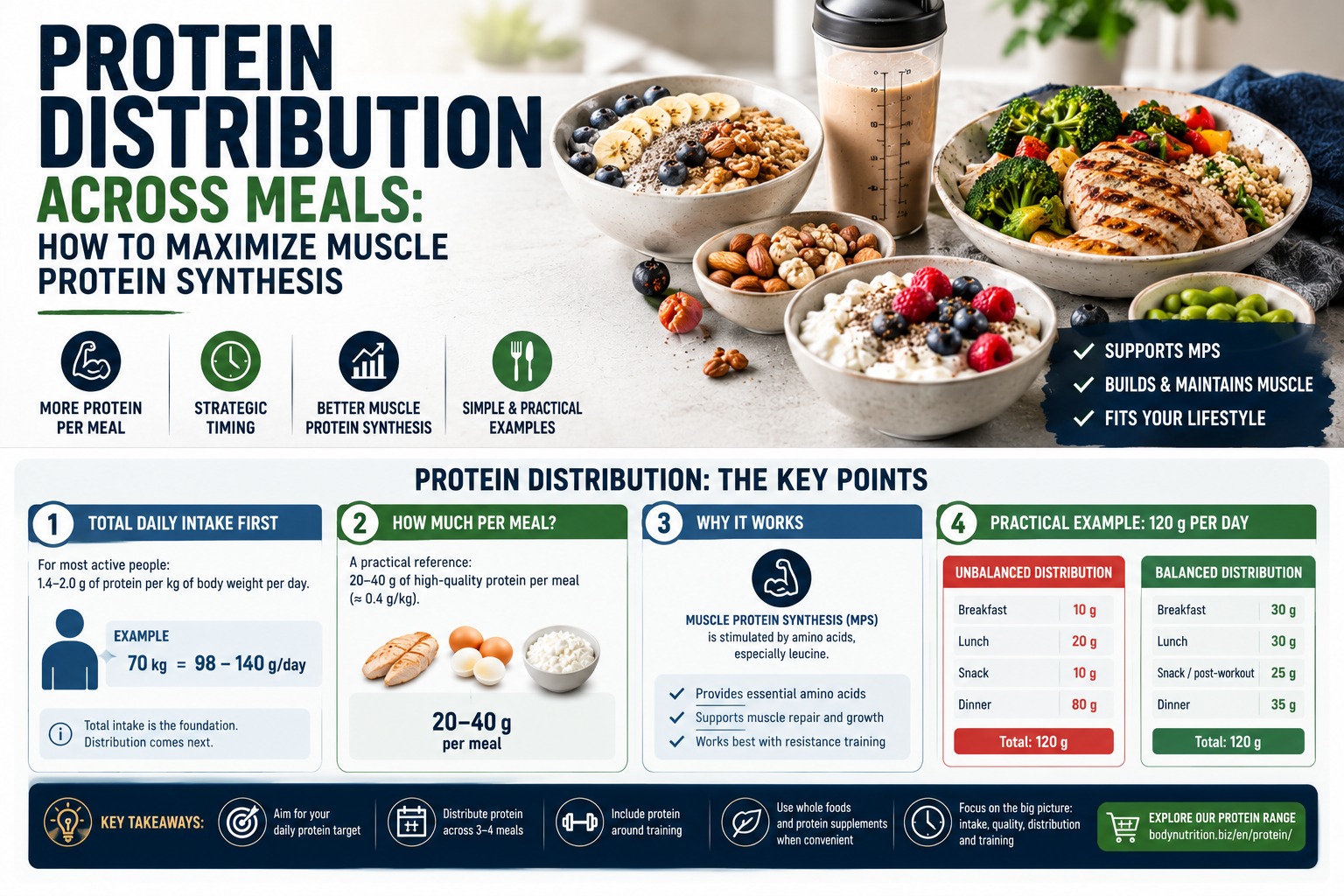
For most physically active people, an intake of approximately 1.4–2.0 g of protein per kilogram of body weight per day is commonly considered sufficient to support muscle building and maintenance.
Once an adequate daily intake has been established, protein distribution can be considered an additional optimisation strategy.
A perfectly even distribution cannot compensate for an inadequate total protein intake. The daily total therefore remains the foundation.
How much protein should you eat per meal?
There is no single amount that is ideal for everyone. Body weight, age, meal size, protein quality, training status and total daily intake can all influence requirements.
As a practical reference, approximately 20–40 g of high-quality protein per meal is frequently recommended for physically active adults.
A more individual approach is to consider body weight. An intake of around 0.4 g of protein per kilogram of body weight per meal can be a useful starting point when distributing daily protein across approximately four meals.
| Body weight | Example at 0.4 g/kg per meal |
|---|---|
| 60 kg | about 24 g |
| 70 kg | about 28 g |
| 80 kg | about 32 g |
| 90 kg | about 36 g |
| 100 kg | about 40 g |
These figures are practical reference points, not strict limits or individual prescriptions.
Can your body absorb only 20 or 30 grams of protein at once?
No. This is one of the most persistent myths in sports nutrition.
Your digestive system can digest and absorb considerably more than 20 or 30 grams of protein from a meal. The scientific question is different: how much protein is required in a particular feeding to produce a strong muscle protein synthesis response?
Protein consumed beyond the amount required to maximise MPS at a particular moment is not automatically wasted. Amino acids have many functions throughout the body and their metabolism extends far beyond building skeletal muscle.
How often should you eat protein?
A practical approach is to distribute meaningful protein servings approximately every 3–4 hours across the day.
For example:
- breakfast containing a substantial protein source;
- lunch with an adequate protein serving;
- a snack or meal around training when useful;
- dinner containing another substantial protein source.
This is a guideline rather than a stopwatch rule. There is no need to interrupt your day because exactly four hours have passed since your previous meal.
The more important objective is to avoid a pattern in which breakfast and lunch contain very little protein while almost the entire daily intake is concentrated at dinner.
Practical example: distributing 120 g of protein per day
Consider someone whose target is approximately 120 g of protein per day.
A heavily skewed distribution could look like this:
| Meal | Protein |
|---|---|
| Breakfast | 10 g |
| Lunch | 20 g |
| Snack | 10 g |
| Dinner | 80 g |
A more balanced distribution could instead be:
| Meal | Protein |
|---|---|
| Breakfast | 30 g |
| Lunch | 30 g |
| Snack / post-workout | 25 g |
| Dinner | 35 g |
Both examples provide exactly 120 g of protein. The second approach simply provides a meaningful protein serving at more points throughout the day.
Do you need protein immediately after training?
The traditional idea of an extremely narrow “anabolic window” has often been exaggerated.
Resistance exercise increases the muscle's sensitivity to amino acids for considerably longer than a few minutes after your final set. Consuming protein around your workout remains practical, but you do not need to rush to your shaker the moment you put down the weights.
If you consumed a substantial protein-containing meal relatively close to your workout, the need for an immediate post-workout protein serving becomes less urgent.
Think about your pre- and post-workout meals as part of the overall daily protein distribution rather than as isolated events.
Breakfast: the meal that often needs more protein
For many people, protein intake is naturally uneven throughout the day. Breakfast may contain relatively little protein, while dinner provides a much larger amount.
This makes breakfast one of the easiest places to improve protein distribution.
Eggs, Greek-style yoghurt, milk, cottage cheese and other protein-rich foods can increase the protein content of the first meal of the day.
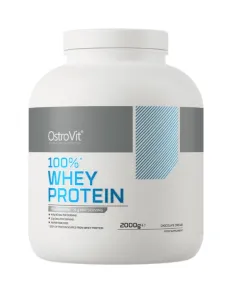
When reaching an appropriate amount through food is inconvenient, protein powder can also provide a practical option.
When can protein powder be useful?
Protein powder is not required to stimulate muscle protein synthesis. It is entirely possible to meet your protein requirements through whole foods.
Its main advantage is convenience. A measured serving can increase the protein content of a meal that would otherwise contain very little, or provide a practical protein source around training.
If you want to compare whey, plant-based and other protein supplements, explore the Protein range available from Body Nutrition.
Should you eat protein before bed?
Sleep creates a relatively long period without food intake, which has led researchers to investigate whether consuming protein before bed can support overnight muscle protein synthesis.
Studies show that pre-sleep protein can provide amino acids during the overnight period and support overnight MPS, particularly in conjunction with resistance training.
However, pre-sleep protein is an option, not a requirement. It should still be considered within your total daily protein and calorie intake.
If your evening meal and overall diet already provide sufficient protein, there is no need to automatically add another shake simply because bedtime is approaching.
Does better protein distribution mean eating more protein?
No. Protein quantity and protein distribution are two different things.
If your daily target is 120 g, improving distribution means reorganising those same 120 g across your meals. It does not mean automatically increasing your intake to 150 or 180 g.
This distinction becomes particularly important when calorie intake also needs to be controlled.
For more information about calories, macronutrients and meal planning, explore the Nutrition & Meal Plans section.
A simple protein distribution strategy
- Establish an appropriate daily protein target first.
- Look at how many meals you actually eat rather than creating unnecessary meals just for protein.
- Include a meaningful protein source in your main meals.
- Identify meals that are particularly low in protein, often breakfast or certain snacks.
- Use protein supplements for convenience when useful, not because they are mandatory.
- Fit pre- and post-workout protein into the entire day's intake.
Conclusion: daily protein first, distribution second
For building and maintaining muscle, meeting an adequate total daily protein intake remains the priority. Once that foundation is in place, distributing meaningful servings of protein across several meals can be a practical way to provide essential amino acids to the muscles multiple times throughout the day.
There is no need to become obsessive about timing. Protein does not suddenly become useless after a certain number of hours, and your body does not stop absorbing it once a meal exceeds 20 or 30 grams.
A sensible approach combines adequate total protein, high-quality protein sources, reasonable meal distribution and progressive resistance training.
Frequently Asked Questions
How much protein should I eat at each meal?
Approximately 20–40 g of high-quality protein per meal is a useful general reference for many physically active adults. Around 0.4 g/kg per meal can provide a more individual starting point, but neither figure should be treated as a rigid threshold.
Is eating more than 30 g of protein in one meal a waste?
No. Your body can digest and use larger amounts of protein. The amount required to produce a strong acute muscle protein synthesis response should not be confused with the total amount of protein your body can digest and utilise.
Do I have to eat protein every three hours?
No. Spacing substantial protein servings approximately 3–4 hours apart is a practical sports nutrition strategy, not a rule that needs to be followed with a timer.
Is protein timing more important than daily protein intake?
No. Meeting an adequate daily protein intake comes first. Timing and meal distribution can then be used to refine your nutrition strategy.
Do I need a protein shake after every workout?
No. Protein powder is simply a convenient source of protein. Whether a post-workout shake is useful depends on your overall protein intake and when you ate protein before and after training.
Recommended products

Share this article: