Shopping Cart
Protein quality and digestibility: animal vs plant sources explained


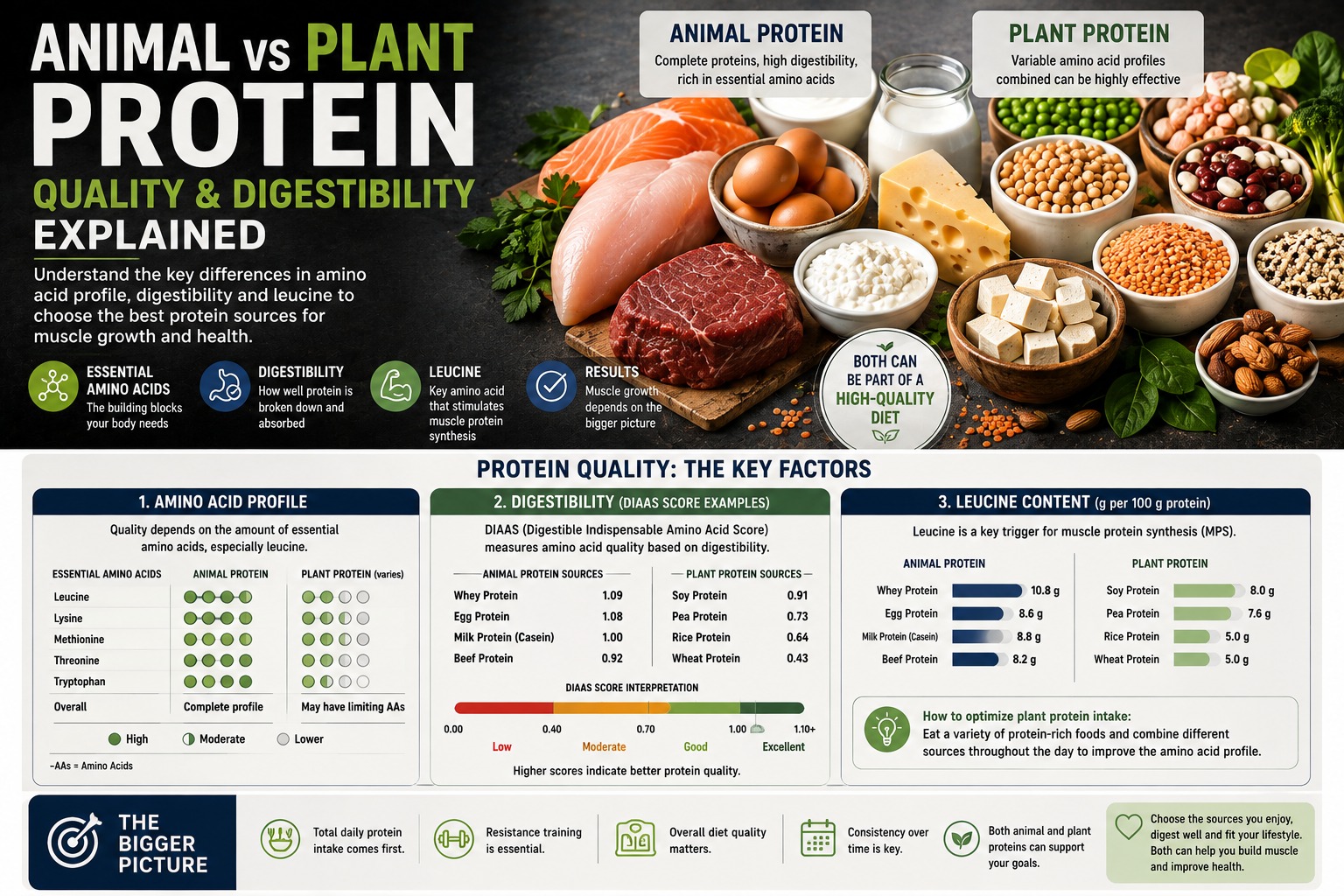
Is animal protein better than plant protein? The answer is more nuanced than a simple yes or no. Protein quality depends on several factors, including its essential amino acid profile, digestibility and the amount of each amino acid that becomes available to the body after digestion.
Animal proteins such as dairy, eggs, meat and fish generally provide all essential amino acids in favourable proportions and tend to be highly digestible. Many plant proteins have lower levels of one or more essential amino acids or lower digestibility, but this does not mean that a plant-based diet cannot provide enough high-quality protein.
The practical question is therefore not simply “animal or plant?”, but how much protein you consume, which sources you choose and how those sources fit into your overall diet.
For more information about protein intake, muscle growth and supplementation, explore the Protein & Muscle Growth section of Body Nutrition Magazine.
What does protein quality actually mean?
Protein quality describes how effectively a dietary protein can provide the essential amino acids required by the human body.
Proteins are made from amino acids. Some amino acids can be produced by the body, while others must be obtained through the diet and are therefore called essential or indispensable amino acids.
A high-quality protein generally combines:
- an adequate amount of essential amino acids;
- a favourable essential amino acid profile;
- good digestibility;
- high availability of those amino acids after digestion.
This means that looking only at the number of grams of protein printed on a food label does not tell the whole story.
What is protein digestibility?
Before amino acids from food can be used by the body, dietary proteins must be digested and their amino acids absorbed.
Protein digestibility therefore describes how effectively a protein source can be broken down and made available for absorption.
Animal proteins generally have high digestibility. Plant foods can have lower digestibility because their protein is contained within a different food matrix and may be accompanied by fibre and naturally occurring compounds that influence digestion and amino acid availability.
Processing can also change digestibility. Cooking, protein extraction, concentration and isolation can make some plant proteins substantially more digestible than their original whole-food source.
Essential amino acids: why they matter
Muscle protein synthesis requires all of the essential amino acids. If one essential amino acid is present in relatively low amounts, it can limit how effectively a particular protein source contributes to protein synthesis.
This is why the term “complete protein” is often used for proteins that provide all essential amino acids in adequate proportions.
Most animal proteins naturally have a favourable essential amino acid profile. Plant proteins also contain essential amino acids, but some sources contain relatively lower amounts of particular amino acids.
For example, cereals tend to be relatively low in lysine, while many legumes contain less methionine. This is one reason why eating a variety of plant protein sources can improve the overall amino acid profile of the diet.
Why is leucine important for muscle protein synthesis?
Leucine is one of the branched-chain amino acids and plays an important signalling role in stimulating muscle protein synthesis.
High-quality animal proteins, particularly dairy proteins such as whey, tend to provide relatively high amounts of leucine per gram of protein.
Some plant proteins contain less leucine for an equivalent protein dose. This can partly explain why certain plant proteins produce a smaller acute muscle protein synthesis response when identical gram-for-gram amounts are compared.
However, this difference can potentially be reduced by consuming an adequate amount of plant protein, selecting protein-rich plant sources or combining complementary proteins.
Animal vs plant protein: the main differences
| Characteristic | Animal Protein | Plant Protein |
|---|---|---|
| Essential amino acids | Generally high | Varies by source |
| Digestibility | Generally high | More variable |
| Leucine density | Often higher | Varies considerably |
| Limiting amino acids | Less common | More common in individual sources |
| Fibre | Generally absent | Often present in whole-food sources |
| Quality variation | Usually relatively consistent | Can vary greatly between sources |
These are general characteristics. Individual foods and protein ingredients can differ considerably.
What are DIAAS and PDCAAS?
Scientists have developed methods to evaluate protein quality. Two commonly discussed systems are PDCAAS (Protein Digestibility-Corrected Amino Acid Score) and DIAAS (Digestible Indispensable Amino Acid Score).
Both consider essential amino acid composition and digestibility, although they use different methodologies. DIAAS evaluates the digestibility of individual indispensable amino acids and can provide greater differentiation between protein sources.
These scores can be useful when comparing proteins, but they should not be interpreted as a complete ranking of which foods are “healthy” or “unhealthy”. A person's diet consists of combinations of foods rather than isolated protein ingredients.
Are all plant proteins lower quality?
No. There is considerable variation between plant protein sources.
Soy protein, for example, has a strong essential amino acid profile and is considered a high-quality plant protein. Other sources such as pea, potato and combinations of different plant proteins can also provide useful amino acid profiles.
Research comparing protein quality shows that some animal proteins achieve higher protein-quality scores than many plant proteins, but there is also substantial variation within both categories.
This makes the simple classification of “animal = high quality” and “plant = low quality” too simplistic.
Can combining plant proteins improve protein quality?
Yes. Different plant proteins can complement each other's amino acid profiles.
A classic example is combining legumes and cereals. Cereals are relatively low in lysine but provide methionine, while legumes generally provide more lysine and relatively less methionine.
Examples include:
- rice and beans;
- lentils and whole grains;
- chickpeas and cereals;
- mixed plant protein powders containing several protein sources.
Importantly, complementary proteins do not necessarily need to be eaten in exactly the same mouthful or meal. A varied diet throughout the day can provide a complementary amino acid intake.
Animal vs plant protein for building muscle
When equal amounts are compared in acute studies, some animal proteins can stimulate muscle protein synthesis more strongly than certain plant proteins because of differences in digestibility, essential amino acid content and leucine concentration.
That does not automatically mean that people consuming plant proteins cannot build muscle effectively.
Longer-term research paints a more nuanced picture. Differences in muscle mass and strength can become small when total protein intake is adequate, particularly when high-quality plant proteins such as soy are used.
Resistance training, total daily protein intake, overall calorie intake and consistent training remain major determinants of muscle development.
Do vegetarians and vegans need more protein?
People following predominantly plant-based diets may benefit from paying additional attention to protein quantity, source variety and distribution.
This does not mean that every vegan automatically needs a very high-protein diet. Rather, the lower average digestibility and essential amino acid density of some plant foods can make it useful to consume a variety of protein-rich foods and ensure that total protein intake is adequate.
Legumes, soy foods, tofu, tempeh, seitan, peas, grains, nuts and seeds can all contribute to total protein intake, although their amino acid profiles differ.
What about plant protein powders?
Protein isolation and concentration can remove part of the fibre and other components of the original plant food, producing a more concentrated and often more digestible source of protein.
Common options include:
- soy protein;
- pea protein;
- rice protein;
- hemp protein;
- multi-source plant protein blends.
Blends are particularly interesting because manufacturers can combine proteins with different amino acid profiles to produce a more balanced formulation.
Which protein supplement should you choose?
The best protein powder depends on more than a theoretical protein-quality score.
If you consume dairy products and tolerate them well, whey and other milk proteins provide highly digestible protein with a strong essential amino acid profile.
If you follow a vegan diet, avoid dairy or simply prefer plant-based products, soy, pea and blended plant proteins can provide practical alternatives.
If you want to compare whey, plant-based and other protein supplements, explore the Protein range available from Body Nutrition.
Does protein source matter more than total protein intake?
For most physically active people, consuming enough protein across the entire day should come before obsessing over small differences in protein-quality scores.
Protein quality can become more relevant when total intake is low, when the diet relies heavily on a narrow range of lower-quality protein sources or when protein requirements are particularly important.
A varied diet with sufficient total protein can compensate for many differences between individual foods.
Animal or plant protein: a practical approach
Instead of viewing animal and plant proteins as opposing choices, consider the quality and composition of your overall diet.
- Meet your total daily protein requirement first.
- Include several protein-rich foods throughout the day.
- Choose varied plant sources if most of your protein comes from plants.
- Consider essential amino acids and leucine when choosing a protein supplement for sports nutrition.
- Use protein powders for convenience, not because whole foods are inadequate.
- Remember that protein quality is only one aspect of food quality.
Conclusion: protein quality is more than animal vs plant
Animal proteins generally have high digestibility and favourable essential amino acid profiles, while plant proteins show greater variation in digestibility, leucine content and limiting amino acids.
But this does not make plant protein inherently inadequate. Choosing high-quality plant sources, eating sufficient total protein and combining a variety of foods can provide an effective amino acid intake.
For muscle growth, the most useful approach is therefore to consider total protein intake, protein quality, distribution and resistance training together rather than judging a diet on whether its protein comes from animals or plants.
Frequently Asked Questions
Is animal protein always better than plant protein?
No. Animal proteins generally have high digestibility and essential amino acid content, but some plant proteins are also high-quality sources. Overall protein intake and dietary variety are important.
Can plant protein build muscle?
Yes. Plant proteins can support muscle growth when sufficient protein and essential amino acids are consumed and combined with appropriate resistance training.
What is the best plant protein?
There is no single best option. Soy has a particularly strong amino acid profile, while pea and blended plant proteins can also be useful choices depending on the formulation and total protein intake.
Do I need to combine plant proteins at every meal?
No. Eating a varied selection of plant protein sources across the day can provide complementary essential amino acids without requiring specific food combinations at every meal.
Is whey more digestible than plant protein?
Whey is a highly digestible protein. Plant-protein digestibility varies considerably depending on the source and processing method, so it is more accurate to compare specific proteins rather than treating every plant protein as identical.
Recommended products
Share this article: