Shopping Cart
Protein and satiety: how to use it in meals without excess calories


Protein can help you feel fuller for longer, but simply adding a protein shake or another high-protein food to every meal does not automatically make your diet better for weight management. If protein is added on top of everything you already eat, your total calorie intake increases too.
A more effective approach is to build meals around an appropriate protein source and combine it with vegetables, carbohydrates and fats according to your energy needs and goals. This allows you to take advantage of protein's satiating properties without unnecessarily increasing the calorie content of your diet.
If you want to learn more about protein intake for training and muscle development, explore the Protein & Muscle Growth section of Body Nutrition Magazine.
Why can protein help you feel fuller?
Among the macronutrients, protein is generally associated with a strong satiating effect. After a protein-containing meal, several physiological signals involved in appetite regulation and feelings of fullness can be affected.
This should not be interpreted as an automatic weight-loss mechanism. Feeling fuller may make it easier to control food intake, but changes in body weight still depend primarily on overall energy balance over time.
More protein does not automatically mean fewer calories
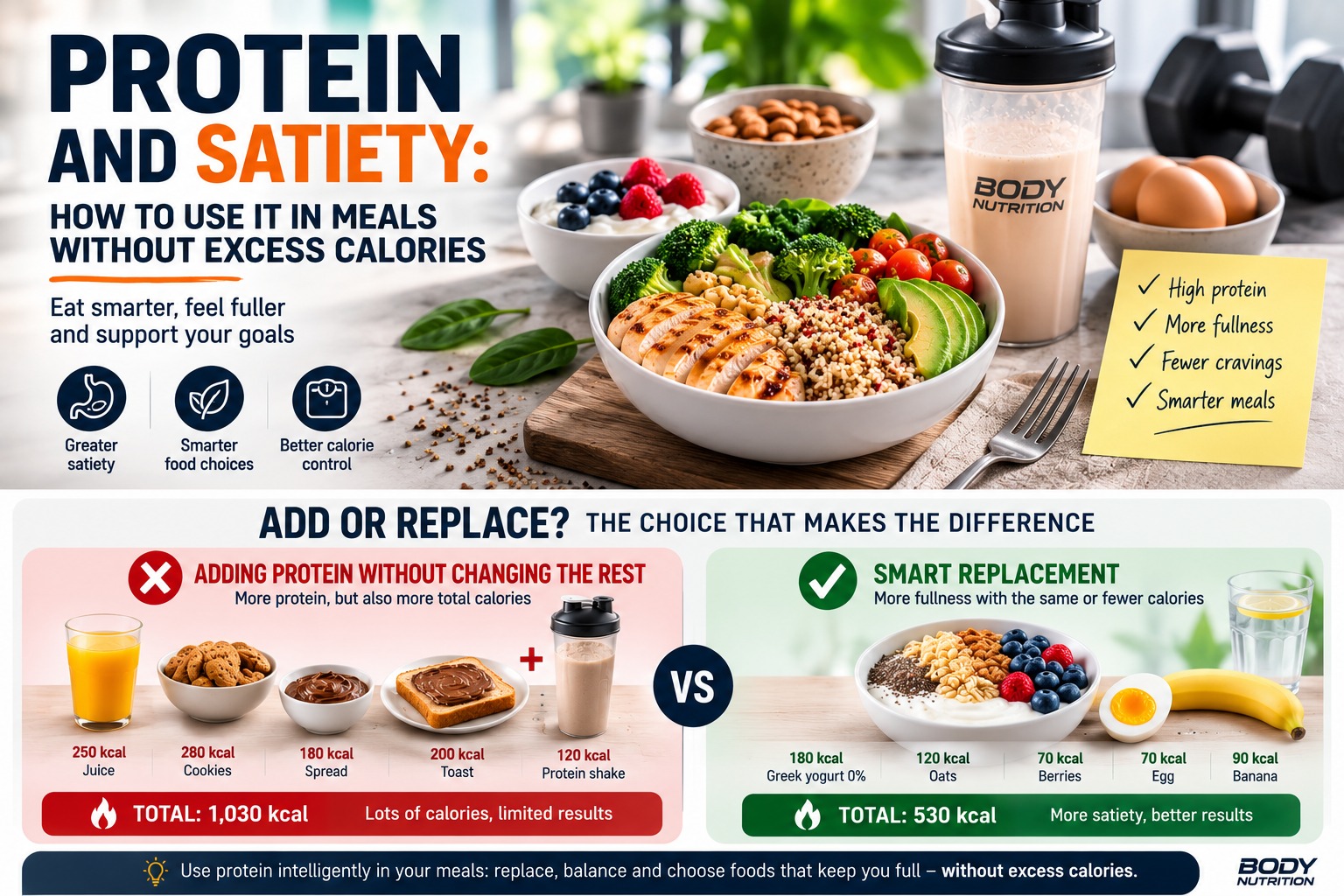
A common mistake is to add protein without changing anything else in the meal.
Imagine a breakfast that already includes biscuits, a sweet spread and a calorie-containing drink. Adding a protein shake certainly increases the amount of protein, but it also increases the total energy content of the breakfast.
A better strategy may be to replace part of a less satiating meal with a protein-rich option rather than simply adding protein on top of everything else.
How to build a high-protein, filling meal
A simple meal structure can include four main components:
- A protein source, such as lean meat, fish, eggs, dairy products, legumes, tofu or other plant-based proteins.
- Vegetables or other fibre-rich foods to increase the volume and nutritional variety of the meal.
- A carbohydrate source appropriate for your energy requirements and physical activity.
- A controlled amount of dietary fat, remembering that fat is particularly energy-dense.
There is no single ideal proportion for everyone. Portions and macronutrient distribution depend on body weight, physical activity, goals, total energy requirements and the rest of your diet.
Watch out for calories that are easy to overlook
A food can contain plenty of protein while also being relatively high in calories. It is therefore useful to distinguish between protein density and simply containing some protein.
High-fat cheeses, nuts, nut butters and certain snacks can contribute protein, but they may also provide significant amounts of fat and therefore energy.
This does not mean these foods should be avoided. It simply means that when calorie control is important, portion size matters just as much as food choice.
Can protein powder help with satiety?
Protein powders are primarily a convenient way to increase protein intake when reaching your target through food alone is difficult or impractical.
They can be used at breakfast, as a snack or as an ingredient in recipes, but they do not need to be added automatically to a meal that already contains enough protein.
If you want to compare whey and other protein supplements, you can explore the Protein range available from Body Nutrition.
Is a protein shake as filling as solid food?
Not necessarily. Satiety depends on more than the number of grams of protein you consume. Food volume, texture, fibre content, eating speed and the overall composition of the meal can all influence how full you feel.
A protein shake can therefore be extremely convenient, but when controlling hunger is the main objective, it may be more useful as part of a complete meal or snack rather than being consumed in isolation.
How to add more protein to breakfast without adding too many calories
Breakfast is one of the easiest meals to improve through smart substitution rather than simple addition.
Instead of keeping a breakfast rich in baked goods or sugary foods unchanged and adding a protein shake, you could restructure it around foods such as high-protein yoghurt, milk, eggs or a portion of protein powder, then add fruit and an appropriate amount of cereal or another carbohydrate source.
The objective is not to create the highest-protein breakfast possible. It is to build a meal that is filling, nutritionally balanced and compatible with your calorie requirements.
What about high-protein snacks?
A protein-rich snack can be useful, particularly when there is a long interval between two main meals.
Yoghurt, cottage cheese, other protein-rich foods or a shake can all be practical choices. However, the same principle applies: if the snack is not actually needed and is simply added to your usual meals, it increases your total daily energy intake.
Protein during a calorie-restricted diet
When the goal is fat loss, protein's satiating effect can be particularly useful because managing hunger may make a calorie deficit easier to maintain.
An adequate protein intake is also particularly relevant when calorie restriction is combined with resistance training and the goal is to preserve as much lean mass as possible.
For more information about calories, macronutrients and meal planning, explore the Nutrition & Meal Plans section.
5 practical ways to use protein for satiety without excess calories
- Start with the protein source: decide on the main protein component before building the rest of your meal.
- Replace rather than simply add: if you introduce high-protein yoghurt or a shake, consider what it is replacing.
- Add fibre and volume: vegetables, fruit and other fibre-rich foods can contribute to fullness.
- Watch sauces and toppings: oils, sauces, spreads and toppings can quickly increase the calorie content of an otherwise balanced meal.
- Consider the whole day: one perfectly designed meal matters less than the overall balance of your daily diet.
Protein and satiety: the key is smart substitution
Protein can be a useful tool for managing appetite, but more protein does not automatically mean a better or lower-calorie diet.
The most practical principle is to include an appropriate amount of protein in your meals and, when necessary, use protein-rich foods to replace less filling choices rather than adding them indiscriminately.
Both whole foods and protein powders can have a place in a balanced diet. The best choice depends on convenience, preferences, protein requirements and the calories available within your overall nutrition plan.
Frequently Asked Questions
Does protein reduce hunger?
Protein can increase feelings of fullness and may reduce hunger in the short term. However, individual responses vary and satiety is also influenced by the overall composition of the meal.
Can a protein shake help with weight loss?
Not automatically. A shake may be useful if it helps you meet your protein requirements or replaces a more calorie-dense option. If it is simply added to your normal diet, however, it provides additional calories.
Is it better to get protein from food or supplements?
Whole foods should form the foundation of a balanced diet. Protein powders are a convenient supplement that can help when reaching your protein target through food alone is difficult.
Should I eat protein at every meal?
Distributing protein sources throughout the day can be a practical strategy, particularly for physically active people. The appropriate amount depends on your individual requirements and total daily protein intake.
Share this article: