Shopping Cart
How to gain muscle fast: proven workout and strength tips


To build muscle effectively, you need a strategic approach that combines dedicated resistance training, smart nutrition, and intentional recovery. This guide provides practical, evidence-based methods to stimulate muscle growth by applying the principles of progressive overload, consuming optimal amounts of protein, and timing your meals correctly. Follow these actionable strategies to gain muscle fast: use structured workout splits, determine the right calories needed to build muscle, and incorporate supplements that help elevate muscle protein synthesis throughout the day.
Build muscle with proper nutrition and calorie surplus
Aim to consume 250–500 calories above your maintenance level each day to accelerate muscle gain while minimizing excess fat storage. This caloric surplus provides the energy required for anabolic processes, helping you build muscle more efficiently. Combine this surplus with appropriately timed protein intake to create an optimal internal environment for training-induced muscle growth.

Calculate your protein and calorie needs daily
A well-structured diet for muscle growth requires 1.6–2.2 grams of protein per kilogram of body weight daily. For instance, an 80 kg individual would need 128–176 grams of protein, ideally split over multiple meals. Distributing your protein intake evenly throughout the day helps maintain elevated amino acid levels, supporting continuous muscle protein synthesis and steady muscle gain.
- Daily protein target: Multiply your body weight in kilograms by 1.6–2.2 to determine how much protein you need to gain muscle.
- Per-meal protein intake: Target 0.3–0.4 g/kg per meal—approximately 30 grams for a 75 kg person.
- Complete protein sources: Eat eggs, Greek yogurt, whey protein, chicken breast, salmon, lean beef, and legumes to ensure you get all essential amino acids.
- Meal frequency strategy: Plan 4–5 meals and consume protein every 3–4 hours—through breakfast, lunch, dinner, and well-chosen snacks—to sustain muscle growth.
Complex carbohydrates—such as brown rice, oats, quinoa, and sweet potatoes—should supply 40–50% of your total calories to replenish glycogen stores for demanding training. Healthy fats from sources like avocado, nuts, and olive oil should make up 20–25% of your caloric intake to support hormone function and provide sustained energy for workouts. Crucially, include protein in every meal to ensure your overall nutrition consistently promotes muscle gain.
Time your meals to maximize muscle protein synthesis
The calories needed to build muscle are most effective when strategically timed around your workout. About 30–60 minutes before you train, consume 60–80 grams of carbohydrates—such as oatmeal or whole-grain toast—to maximize glycogen availability. Within an hour after your workout, intake 20–30 grams of fast-digesting whey protein along with 40–50 grams of high-glycemic carbs to speed up recovery and nutrient delivery during the critical anabolic window.
Eating a slow-digesting protein source like cottage cheese before bed can supply your muscles with amino acids for 7–8 hours, helping to prevent overnight muscle breakdown. To make it easier to include protein in your diet, consider adding a scoop of protein powder to shakes or recipes. For a comprehensive seven-day schedule detailing exactly what to eat, how to train, and the specific calories needed to build muscle, explore our muscle gain meal plan.
Optimize protein timing throughout your training day
To maximize muscle growth, it's crucial to consume a fast-digesting whey protein shake within 30–60 minutes after your workout—the precise window when muscle protein synthesis peaks dramatically. This strategic protein timing for muscle growth efficiently converts the stress of your exercise into new muscle tissue. Just remember to spread your total daily protein intake evenly, ensuring your body has the resources it needs to continuously rebuild during periods of rest and recovery.
For a more detailed look at choosing and dosing the right product, check out this comprehensive whey protein guide. It compares isolate, concentrate, and hydrolyzed options, explaining how each can support different muscle-building programs.
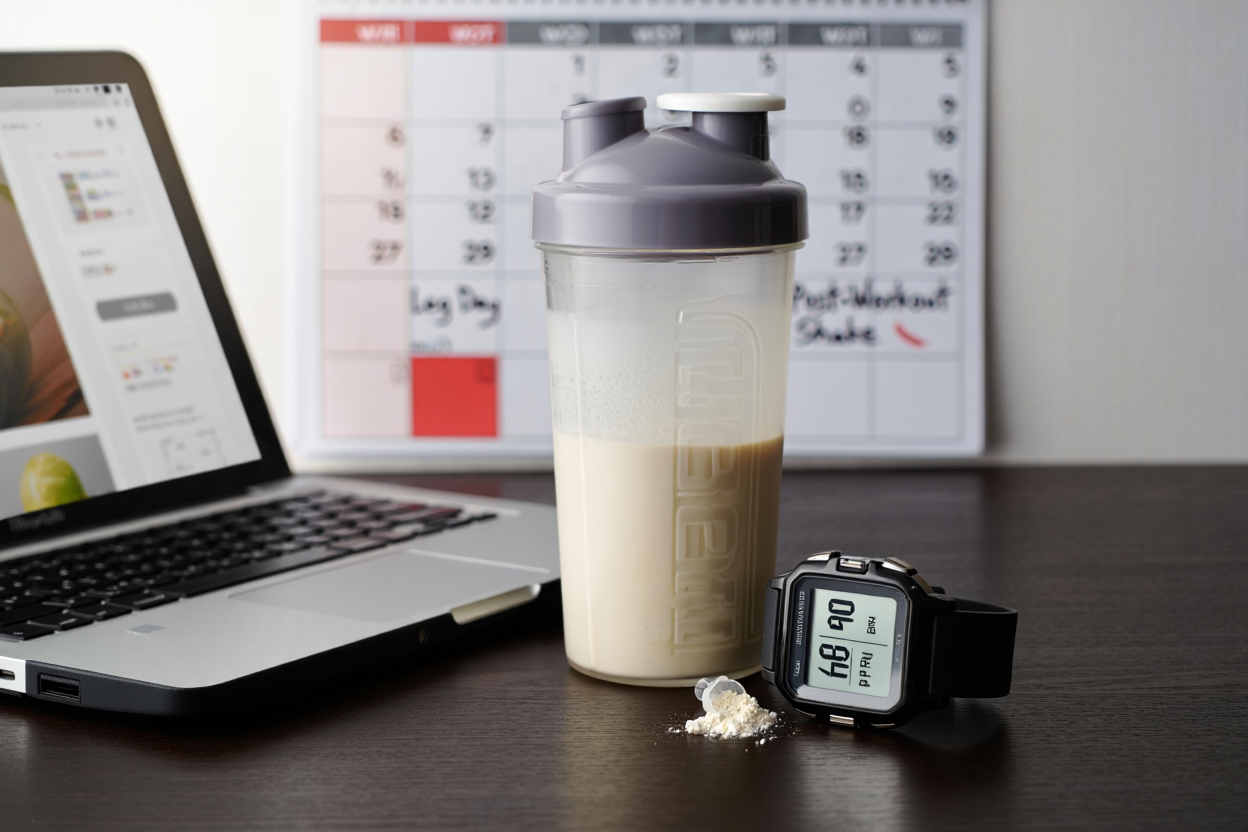
Strategic pre and post workout nutrition windows
About 30 minutes before your training begins, aim to eat 15–20 g of protein so amino acids are already in your bloodstream when you start exercising. Right after your workout, have 20–30 g of whey isolate or hydrolyzed whey along with 20–40 g of high-glycemic carbs. This combination triggers an insulin surge that speeds up nutrient delivery, jump-starts recovery, and helps you gain muscle mass effectively from every session.
Hydrolyzed whey is especially useful here because it leaves your stomach in just 30–45 minutes. This minimizes bloating while rapidly shuttling leucine to your muscle cells, kick-starting the repair process. This precise nutrient timing for muscle gain keeps your body in an optimal anabolic state and reduces the downtime needed to build muscle between intense workouts.
Spread protein intake every few hours for growth
To keep muscle protein synthesis elevated all day long, try to eat protein every three to four hours. For example, a 75 kg athlete could target 30 g at breakfast, 30 g at lunch, 15–20 g in snacks, and 30–40 g at dinner. Each serving should deliver at least 2–3 g of leucine to activate mTOR and support sustained muscle mass gains from your exercise efforts.
- Breakfast protein: Options like eggs, Greek yogurt, or whey powder provide 30–40 g of complete protein to initiate the day's muscle-building processes.
- Mid-morning snack: Cottage cheese, almonds, or a quick shake offer 15–20 g to maintain stable amino acid levels while you work or study.
- Lunch serving: Chicken breast, salmon, or tofu supply 35–40 g of high-quality protein, along with carbs to replenish the glycogen you used during training.
Consider alternating between fast-digesting whey for daytime training and slow-digesting casein at night. This approach extends the anabolic effect over a full 24 hours, helping you grow muscle steadily while meeting your overall nutrition targets. Aim for a daily protein intake of 1.6–2.2 g per kg of body weight to support recovery and muscle gain.
Use casein before bed to grow muscle overnight
Micellar casein takes six to eight hours to digest, slowly releasing amino acids throughout the night to prevent muscle breakdown while you sleep. A 30 g serving before bed supplies a steady stream of building blocks so your muscles can recover, repair, and gain muscle even during complete rest.
Blended powders that combine fast-acting whey with slow-release casein broaden the anabolic window to around five hours. This creates an ideal evening shake that supports muscle gain, enhances workout recovery, and maintains the consistent muscle-building environment needed to grow muscle over time.
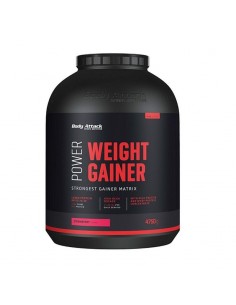
When whole foods don't provide enough calories, mass gainers—which blend casein, fast carbs, and healthy fats—can add 500–800 kcal per serving. These help lifters meet the energy demands required for muscle mass expansion. Always monitor your daily intake to ensure you're hitting the protein, calorie, and nutrient timing for muscle gain goals that are essential for long-term progress.
Recommended products
Master progressive overload with optimal reps and sets
Continuous muscle growth relies on applying consistent mechanical tension through progressive overload and adequate training volume in every workout. To prevent stagnation and encourage your muscles to adapt, try increasing the load by 2-5 percent, completing one to two additional reps, or including another set. This approach helps you build muscle fast and avoid plateaus.

Choose the right reps and sets for each exercise
For optimal hypertrophy, aim for 6 to 12 reps per set using 70-85 percent of your one-rep max, and complete between 3 and 6 sets. This rep and set range balances mechanical tension, metabolic stress, and muscle fiber activation—delivering the stimulus needed for ongoing muscle growth and strength gains.
- Hypertrophy rep range: Performing 8-12 reps at 70-75% of your 1RM offers a blend of tension and metabolic stress, ideal for muscle-building phases.
- Strength-building sets: Use 5-7 reps at 80-85% of your 1RM for about four weeks to build a solid strength foundation before cycling back into higher reps.
- Pump sets: Aim for 12-15 reps with 60-65% of your 1RM to maximize metabolic stress and flood muscle fibers with nutrient-rich blood.
- Eccentric emphasis: Lower the weight slowly over 3-4 seconds to increase time under tension and activate more muscle fibers.
Rest periods of 30-90 seconds between hypertrophy sets help maintain a strong pump, while heavier strength work may require 2-5 minutes of recovery. Always perform each lift with proper form to engage the most muscle fibers, protect your joints, and keep your training safe and productive.
| Rep Range | Load (%1RM) | Sets | Rest Period | Primary Goal |
| 6-8 reps | 80-85% | 4-5 | 3-5 minutes | Strength |
| 8-12 reps | 70-75% | 3-4 | 60-90 seconds | Muscle growth |
| 12-15 reps | 60-65% | 3-4 | 45-60 seconds | Metabolic stress |
| 15-20 reps | 50-60% | 2-3 | 30-45 seconds | Endurance pump |
Increase weight weekly to stimulate biceps and muscles
Apply progressive overload each week by increasing the weight by 2-5 percent or adding one extra rep to your sets. Monitor your total training volume—calculated as reps multiplied by load—and let it rise gradually over three weeks. After that, consider a deload week where you reduce volume to 30-40 percent to support recovery.
Build your workout around compound barbell movements like squats, deadlifts, bench presses, overhead presses, and rows to rapidly gain muscle mass. Finish with targeted isolation exercises—such as biceps curls—to fully exhaust specific muscle groups and accelerate your muscle-building progress.
Track training volume and adjust reps per workout
Keep a detailed log of your sets, reps, weight used, and rate of perceived exertion (RPE 7-9) to ensure every exercise helps you progress. If you notice your numbers stalling or your form breaking down, adjust your training volume or load to break through plateaus and continue gaining muscle and strength.
Train each major muscle group two to three times per week using an upper/lower or push/pull/legs split, and allow 48-72 hours for recovery between sessions. Try cycling four weeks of moderate-rep hypertrophy training with one week of heavier lifting to refresh your nervous system and support ongoing improvements in muscle mass.
- Weekly tracking system: Record the exercise, weight, reps, and RPE for every workout so you know precisely when to push for progressive overload.
- Volume calculations: Multiply the number of reps by the weight lifted to measure your training stimulus and make logical adjustments to your workload.
- Performance metrics: Focus on increasing reps first, then add weight—all while maintaining proper form during every lift.
Use RPE scores to monitor intensity: aim for the 7-9 range to promote growth, but ease up if you consistently hit 9 or above. This feedback system supports recovery, ensures proper form, and keeps you on a consistent path to build muscle fast.
Interested in a deeper understanding of why these methods are effective? Check out our muscle hypertrophy guide to learn how mechanical tension, metabolic stress, and strategic training variables come together to drive rapid gains.
Frequently Asked Questions
The quickest way to gain muscle involves pairing progressive overload resistance training three to five days per week with a high-protein diet. Eat 1.6–2.2 grams of protein per kilogram of body weight daily, and aim for a 250–500 calorie surplus. Focus each workout on compound barbell movements, consume about 30 grams of protein every three to four hours, and pair whey isolate with carbohydrates immediately after you train. Prioritizing seven to nine hours of sleep nightly and supplementing with 3–5 grams of creatine monohydrate can boost strength and training volume by around ten to fifteen percent. This approach promotes consistent muscle-building while minimizing fat gain.
While visible muscle growth typically takes three to four weeks to appear, as your muscles need time to remodel under progressive overload, you can still make tangible progress in two weeks. During this initial period, you may feel stronger, notice a better muscle pump, and see improvements in your exercise performance—provided you train consistently and eat a high-protein food-rich diet. Use these first weeks to establish disciplined habits in both training and nutrition. By weeks four through eight, you should experience measurable muscle hypertrophy, significant gains in strength, and noticeable muscle gain.
Whey protein isolate is among the most effective high-protein foods for accelerating muscle growth post-workout, due to its rapid digestion and high leucine content. However, a well-rounded nutrition plan should also include protein from whole food sources like chicken breast, salmon, eggs, Greek yogurt, lean beef, cottage cheese, and legumes. Consuming slow-digesting casein before bed can further support recovery and overnight muscle-building. Combining these complete protein sources ensures a steady supply of amino acids, enhances muscle hypertrophy, and supports continuous strength development.
Share this article: