Shopping Cart
Caffeine and training: timing and benefits


Caffeine and training: timing and benefits
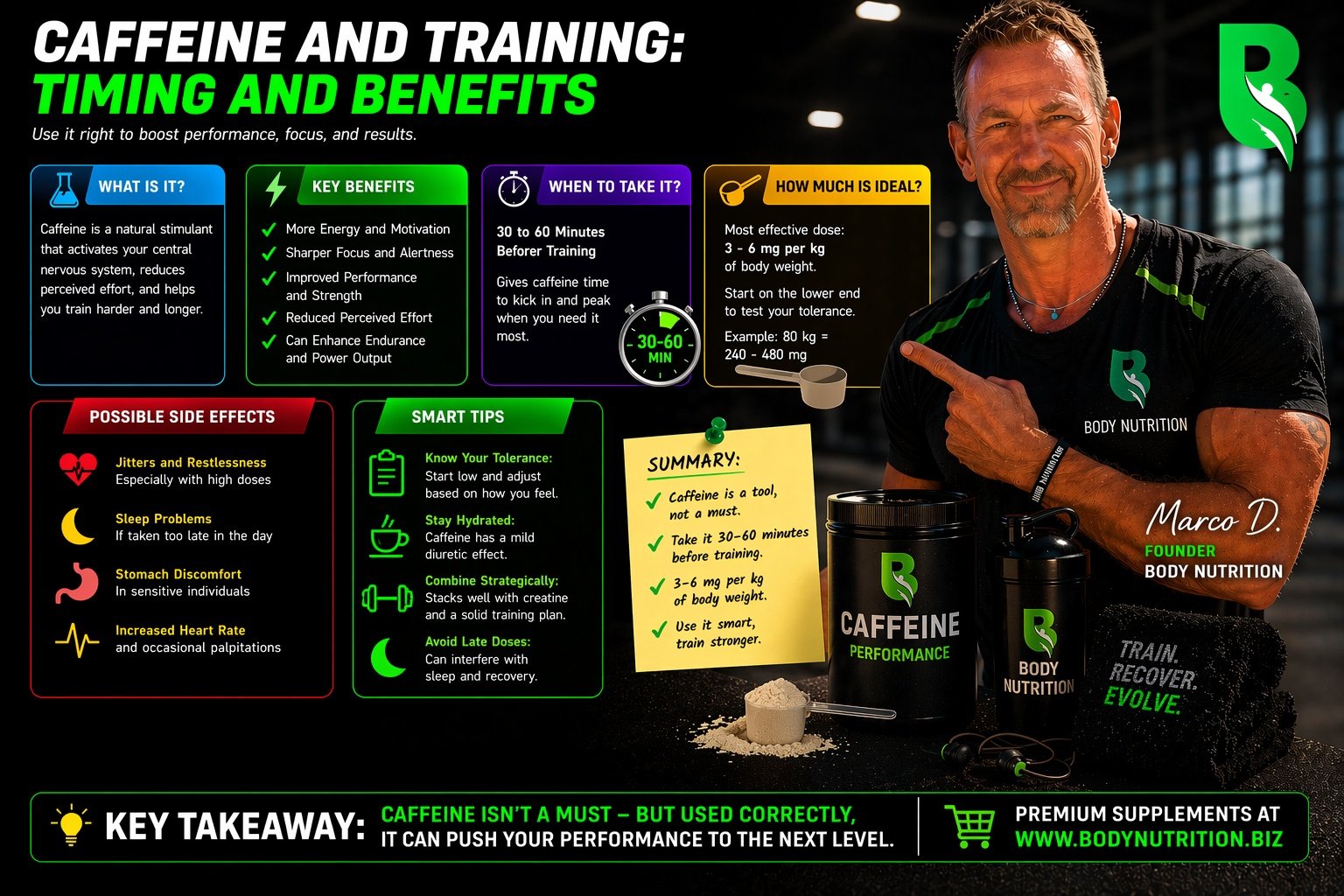
Caffeine is one of the most widely used ingredients in sports supplements and pre-workouts. The reason is simple: many people use it to approach training with more energy, focus and intensity.
To use it well, though, it helps to understand not only its potential benefits, but also when it makes the most sense and when it may be less suitable.
Why caffeine is so popular in training
Caffeine is found in coffee, tea, energy drinks and many workout supplements. In a training context, it is mainly appreciated because it can help increase alertness and make a session feel more manageable and focused.
That is why it is commonly used in strength training, high-intensity sessions and endurance-based workouts alike.
Main benefits of caffeine before training
1. More perceived energy
One of the most noticeable effects is a stronger sense of activation. On low-energy days, caffeine can help you feel more ready to train.
2. Better mental focus
Many people also use caffeine because it can improve concentration. This can be especially useful in workouts that require attention, precision or sustained mental effort.
3. Lower perceived fatigue
Caffeine is often valued because it can help make hard efforts feel more manageable. This may support consistency during demanding sessions.
4. More intensity in hard workouts
For intense lifting sessions, interval work or demanding training blocks, caffeine can be a useful tool when more drive and presence are needed.
When should you take caffeine before a workout?
Caffeine is generally used before training, but the exact timing can vary depending on the product, your habits and your personal sensitivity. What matters most is that it fits your routine and is used deliberately rather than automatically.
Why workout timing matters
If you train in the morning or early afternoon, caffeine is often easier to manage. If you train later in the day, stimulants may be less suitable because they can interfere with sleep.
For evening training, it is often better to be more cautious or consider lower-stimulant or stimulant-free options.
Recommended products


Coffee or pre-workout?
That depends on what you want. A coffee may be enough if you simply want a bit more energy before training. A pre-workout may make more sense if you also want a formula built around focus, pump or workout feel.
Both can work, as long as the choice matches your goal.
When should you be careful?
Not everyone responds to caffeine in the same way. Some people are more sensitive and may notice restlessness, nervousness or sleep disruption more easily. Total daily intake also matters, especially if caffeine is already coming from coffee, energy drinks or other supplements.
Do you need caffeine for every workout?
No. Caffeine can be useful, but it is not essential. If sleep, food intake and general energy are already in a good place, not every session needs a stimulant. Many people prefer to use it only for the most demanding workouts.
Mistakes to avoid
- using caffeine automatically before every session
- stacking too many stimulants together
- ignoring your own sensitivity
- using caffeine to compensate for poor sleep or recovery
Conclusion
Caffeine can be a useful support before training when more energy, focus and intensity are needed. The key is using it with awareness, taking into account workout timing, personal tolerance and the rest of your daily routine.
It works best when it supports an already solid training setup, not when it is used to patch over weak foundations.
Share this article: