
Shopping Cart
How many calories do i need? Use our calorie calculator


Understanding how many calories you need each day is the foundation of any fitness journey, whether you're looking to maintain your current weight, lose fat, or build muscle. By using accurate formulas and a reliable calorie calculator, you can estimate a calorie intake that fits your age, height, activity level, and goals—all while still enjoying the foods you love.
How Many Calories Do You Need Each Day?
Your body uses energy from food to fuel all its functions, from keeping your vital organs running at rest to powering your daily physical activity. This total energy use, known as your daily energy expenditure, changes based on your age, sex, current weight, and how active you are. Aligning your food choices with this number is the key to managing your weight effectively.
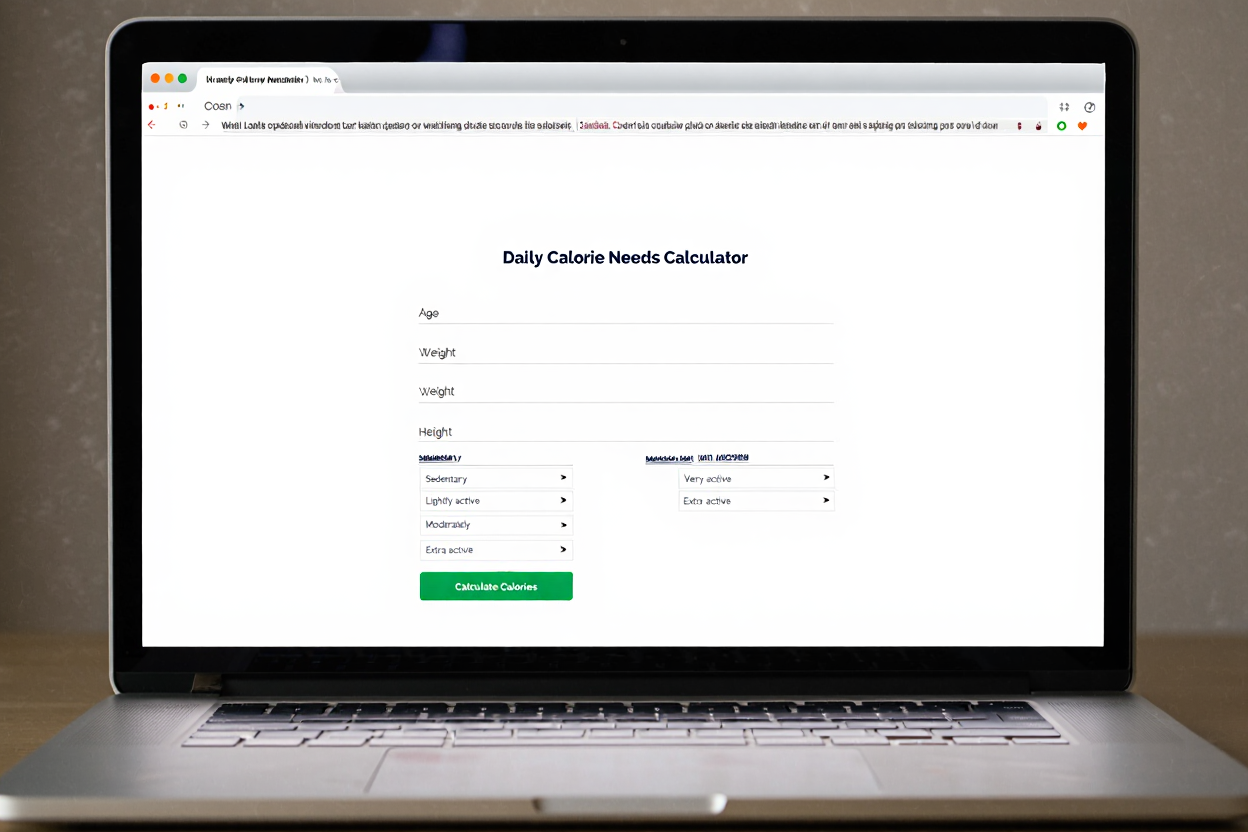
Understanding Your Baseline Calorie Requirements by Age and Gender
General guidelines suggest that men need around 2,500 calories and women about 2,000 calories to maintain their weight at a moderate activity level. However, your actual daily calorie requirements are influenced by your age and lifestyle. For example, the 2020-2025 Dietary Guidelines indicate that women aged 19–30 may need 1,800–2,400 calories, while men in the same age group might need 2,400–3,000 calories—depending on their daily movement.
- Women aged 19–30: 1,800–2,400 calories, adjusted based on activity level and goals.
- Men aged 19–30: 2,400–3,000 calories, accounting for different physical activity patterns.
- Women aged 31–60: 1,600–2,200 calories to maintain their current weight.
- Adults aged 61+: Women typically need 1,600–2,200 calories, and men require 2,000–2,600 calories.
People with sedentary lifestyles usually fall on the lower end of these ranges, while athletes and highly active individuals often reach the upper limits. The Eatwell Guide notes that the average adult woman needs about 2,000 calories a day and a man around 2,500, but actual energy needs vary based on age, sex, activity level, and health. By balancing the five main food groups—fruits and vegetables, starchy foods, protein, dairy (or alternatives), and oils—you can meet your personal calorie requirements and maintain a healthy weight. Daily calorie needs
How Activity Level Impacts Your Daily Calorie Needs
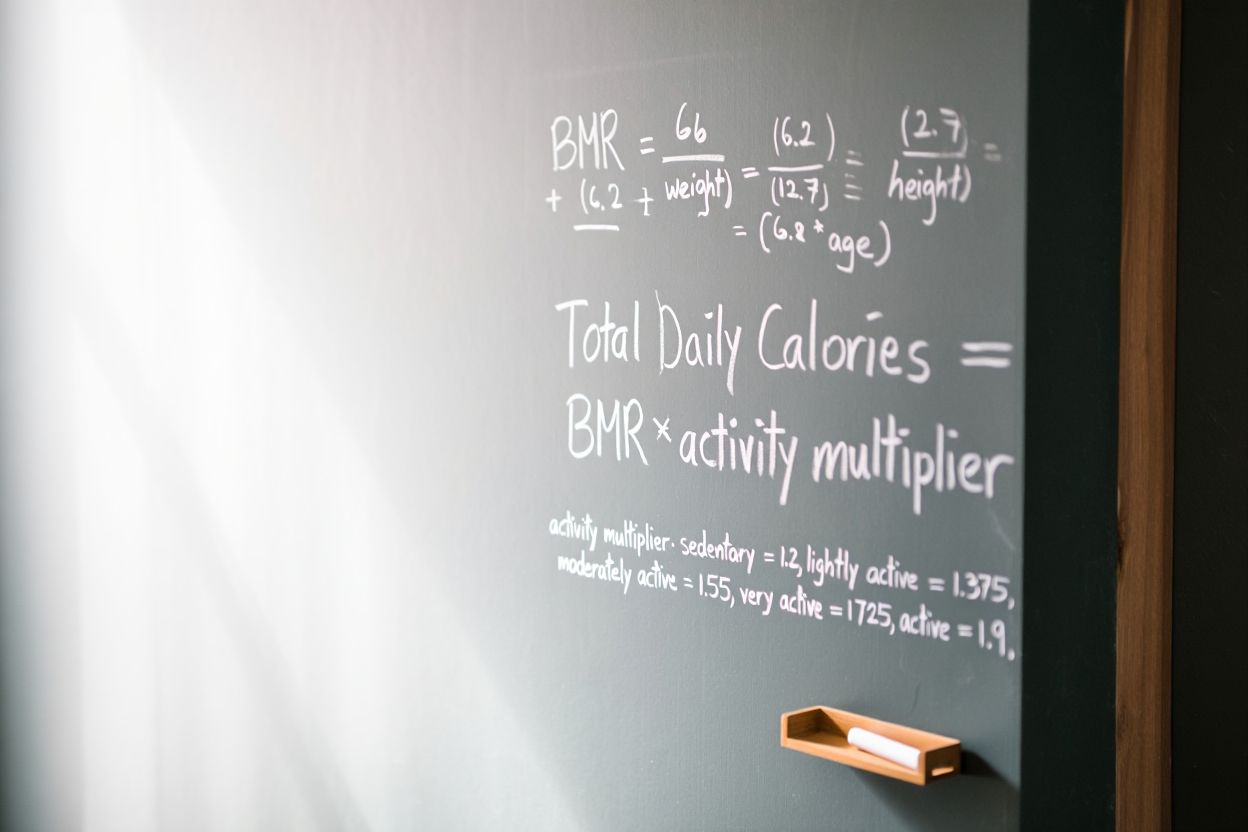
Your basal metabolic rate (BMR) accounts for 60–75% of your total daily energy expenditure—this is the number of calories your body burns at rest. To find your true daily calorie needs, multiply your BMR by an activity factor (ranging from 1.2 for a desk job to 1.9 for intense training). This calculation helps answer the common question: how many calories should I eat a day by age for long-term success.
For instance, a 25-year-old man weighing 80 kg who exercises three times a week may need around 2,600 calories to maintain his weight. A 30-year-old man of the same weight and 180 cm height might require about 2,750 calories, while a 65 kg woman could maintain her weight on 1,800–2,200 calories, depending on her physical activity habits. Adjusting these estimates ensures your calorie intake matches your real-world energy expenditure.
Special Conditions That Increase or Decrease Calorie Requirements
Pregnancy typically requires an additional 300–500 calories per day, and breastfeeding can increase needs by another 500 calories to support milk production. Metabolic conditions like hyperthyroidism can raise calorie requirements, while hypothyroidism may lower them. Certain medications, such as steroids, can also boost energy needs, making personalized monitoring essential.
Elite athletes often exceed standard activity factors (above 1.9) and require specialized nutrition plans that go beyond general guidelines. Genetics, muscle mass, and training intensity can all push maintenance calories beyond typical charts, highlighting the importance of professional guidance for peak performance.
To determine your exact calorie needs, start by entering accurate data and then verify these numbers through consistent real-world tracking. A reliable calorie calculator provides a personalized baseline, but only ongoing observation and adjustment can ensure your calorie intake aligns with your unique body responses and goals.
How to calculate your daily calorie needs accurately
A high-quality calorie calculator simplifies finding your daily energy expenditure by using trusted formulas that factor in your age, height, sex, current weight, and activity level. Treat the resulting maintenance calories as a starting point, then refine the number based on whether your progress supports or contradicts the initial estimate.
Using a calorie calculator for personalized estimates
The " how many calories do I need calculator" tools require precise details and often use equations like Harris-Benedict or Mifflin-St Jeor, rounding results to the nearest 50 calories. These approaches provide scientifically-backed predictions for your maintenance calories and daily energy expenditure, which help inform your nutrition decisions.
- Accurate data entry: Precisely measuring your height and current weight helps the calculator produce a reliable estimate of your daily calorie needs.
- Activity factor selection: Choosing an activity level that reflects your typical routine results in a more accurate estimate of your real energy expenditure and minimizes errors.
- Formula selection: If you have body-fat data available, the Katch-McArdle equation can reduce estimation error even further than age-based formulas.
Use the calculated maintenance calories as your reference point, then adjust by adding or subtracting calories to create a surplus or deficit based on your goals. For muscle-building phases, many experts recommend a moderate muscle calorie surplus of 250-500 kcal to support growth while keeping fat gain to a minimum.
| Age Group | Women (Moderate Activity) | Men (Moderate Activity) |
| 19-30 years | 2,000-2,200 calories | 2,600-2,800 calories |
| 31-50 years | 1,800-2,000 calories | 2,400-2,600 calories |
| 51+ years | 1,600-1,800 calories | 2,200-2,400 calories |
Validating and adjusting your calculated calorie target
After estimating your " how many calories do I need per day", track your body weight over two to four weeks. If your weight stays the same for at least seven days, it confirms that your intake matches your actual energy expenditure. If your weight changes, adjust your calorie intake in small increments of 100-200 calories rather than making drastic changes.
Recalculate using the calorie calculator whenever you gain or lose more than five kilograms or experience a major shift in your activity level. These updates help keep your daily calorie needs aligned with your changing body composition, daily energy expenditure, and lifestyle.
Mastering your calorie intake based on your maintenance calories is key to achieving your fitness goals—whether you want to lose weight, build muscle, or maintain your current physique. By creating a calorie deficit or a targeted calorie surplus alongside balanced nutrition, you can guide your body toward the results you want while taking into account your age, activity level, and lifestyle. Learning to make these adjustments thoughtfully helps you pursue your goals with confidence. For instance, a structured calorie surplus guide can show you exactly how to fuel muscle growth effectively.
Recommended products

Adjusting your calorie intake for weight loss or gain
Your maintenance calories are the foundation for any dietary change—whether you aim to lose weight, gain muscle, or simply maintain. Research shows that a moderate, well-planned adjustment to your calorie intake offers the most sustainable progress while reducing unwanted fat gain or muscle loss. Regularly reassess your needs, as factors like body weight, physical activity, and age can all influence how many calories you need to maintain your weight over time.
Creating a safe calorie deficit for steady weight loss
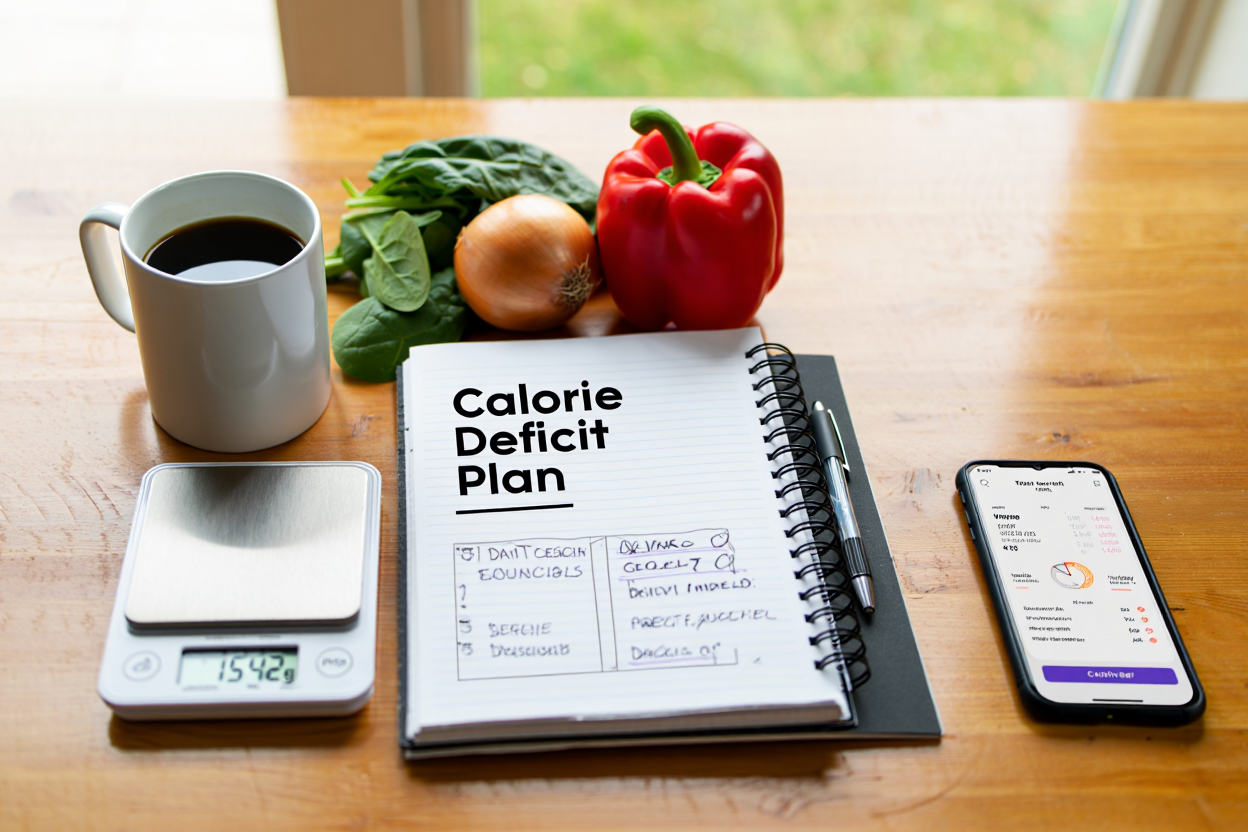
To lose weight effectively, you first need to know how many calories you need to maintain your weight. Once you have that number, create a calorie deficit by reducing your daily intake by 250–500 calories. This supports steady weight loss of around 0.5 kg per week, helping you preserve muscle and maintain hormonal balance. Women seeking more tailored advice should check out this science-backed resource: women calorie needs.
- Deficit calculation: Reduce your calorie intake by 250–500 calories below maintenance to encourage gradual, sustainable fat loss without sacrificing energy.
- Protein preservation: Aim for 1.6–2.2 grams of protein per kilogram of body weight to protect muscle mass during a calorie deficit.
- Progress monitoring: Weigh yourself weekly under consistent conditions and adjust your plan if weight loss stalls or exceeds 1 kg per week.
- Micronutrient focus: Choose nutrient-rich foods to meet vitamin and mineral needs even when your calories are reduced.
While the 3,500-calorie rule suggests that cutting that amount equals one pound lost, real-world weight loss is influenced by factors like hydration, glycogen stores, and metabolism. Expect an initial drop from water weight before fat loss becomes consistent. Reassess your calorie intake every 2–4 weeks to keep your weight loss on track and support long-term health.
Adding a calorie surplus to support muscle growth
Gaining muscle requires a different approach than losing weight. Instead of a deficit, you’ll want a calorie surplus—adding around 250–500 calories above your maintenance level. This provides the energy needed for muscle growth while minimizing unnecessary fat gain. If you gain more than 0.5 kg of weight per month, consider slightly reducing your surplus.
Support your surplus with 1.6–2.2 g of protein per kilogram of body weight, spread over 4–6 meals and timed around workouts to aid recovery. Carbohydrates before and after training help replenish glycogen and improve performance, while consistent strength training and adequate sleep round out an effective muscle-building plan.
Minimum calorie thresholds and safety guidelines
For health and safety, avoid dipping below 1,200 calories per day for women and 1,500 for men unless supervised by a healthcare provider. Very low-calorie diets can lead to nutrient deficiencies, metabolic slowdown, and loss of muscle over time. Instead, make small adjustments of 100–200 calories to allow your body to adapt, and always seek professional guidance before attempting aggressive weight loss methods.
- Minimum intake safety: Stay above 1,200–1,500 kcal daily to support basic metabolic functions and overall health.
- Gradual adjustment: Make calorie changes in small increments to help your hunger, energy, and performance levels stabilize.
- Supervision requirement: Talk to a healthcare provider before starting any very low-calorie plan, especially if you have underlying health issues.
Staying well-hydrated can help manage hunger—drinking water 15–20 minutes before meals may reduce how much you eat by about 15%. Aim for 7–9 hours of sleep per night and practice stress management to help regulate hormones and support your metabolism during a calorie deficit. These habits complement your nutrition plan and contribute to lasting weight loss.
Frequently Asked Questions
To lose weight consistently, you should aim for a calorie deficit of 250-500 calories below your maintenance calories. This typically results in losing about 0.5 kg per week. For example, if a calorie calculator estimates your maintenance needs at 2,600 calories, your daily calorie intake for weight loss would be between 2,100 and 2,350 calories. It's also wise to prioritize protein, aiming for 1.6-2.2 grams per kilogram of body weight. Monitor your progress weekly and adjust your calorie intake if your weight loss stalls or exceeds 1 kg per week.
A daily intake of 1,200 calories is generally considered the lower safe limit for most adult women and should only be attempted under professional supervision. Many women find that a slightly higher intake of 1,400-1,600 calories, combined with exercise, leads to more sustainable weight loss. Men should rarely go below 1,500 calories without medical advice. Extremely low calorie intake can lead to nutrient deficiencies, muscle loss, fatigue, a slower metabolism, and can ultimately sabotage long-term weight loss goals.
It's a good idea to reassess your calorie requirements every four to six weeks. You should also recalculate sooner if your weight changes by more than 5 kg, you enter a new age bracket, or you experience a significant shift in your lifestyle. Using an accurate calorie calculator after starting a new exercise routine, changing jobs, or with the changing seasons helps keep your targets precise. Regular updates ensure your diet plan remains effective and help you maintain the necessary calorie deficit to continue your weight loss journey.
Share this article: