
Shopping Cart
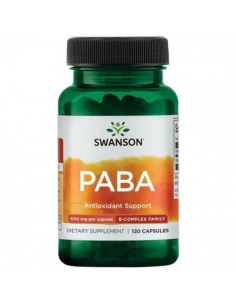
- -41%
Para-aminobenzoic acid (PABA), also known as vitamin B10, is an organic compound found in some foods and produced by the chemical industry.
It was once added to sunscreen and has been used as a supplement to help darken gray hair and improve some skin problems, among other uses.
Vitamin B10 (or vitamin Bx) is an alternative name for the organic compound PABA, a white crystalline substance.
It is considered part of the vitamin B complex, although it is neither a vitamin nor an essential nutrient. It is found in brewer's yeast, offal, mushrooms, whole grains, and spinach.
Your body can also synthesize the compound using certain bacteria in your gut. PABA then assists in the production of folate (vitamin B9). However, the amount of folate produced is inadequate to meet your needs, so you have to get it from other food sources.
PABA is thought to benefit skin and hair when taken as a supplement. It is produced industrially and sold in the form of pill, powder, extract and topical application.
PABA can absorb ultraviolet (UV) rays, particularly UVB rays, which are associated with sunburn and DNA damage. It has therefore been a key ingredient in sunscreen since the 1940s, but was later linked to allergic skin reactions in some people.
As of 2019, PABA is no longer generally recognized as safe and effective for use in sunscreen by the Food and Drug Administration (FDA).
It is sometimes found in some lotions and other products marketed as moisturizers, often in combination with aloe vera, and is rarely used in shampoos, conditioners, and lipsticks.
In addition to protecting against UV rays, PABA is claimed to help with skin problems related to hardening, tissue buildup, and discoloration, although it is unclear how the compound can improve these conditions.
One study found that taking a potassium PABA supplement significantly reduced plaque size in individuals with Peyronie's disease for 12 months, compared to a placebo.
That being said, further research is needed and it is currently believed that PABA is ineffective for the treatment of this condition.
PABA has also been identified as a possible treatment for scleroderma, an autoimmune disease that causes hardening of the skin and fibrous deposits in organs.
A retrospective study of 467 people with scleroderma found that 90 i those who received PABA potassium supplements manifested mild, moderate or marked skin softening, compared to 20 i a control group.
Even so, this is one of the few studies on the subject and was conducted over 30 years ago. Other research has suggested that PABA has no effect on the skin hardening associated with scleroderma, so more research is needed.
Finally, PABA is often touted as a treatment for vitiligo, a condition characterized by depigmentation and white patches on the skin. While some people with this disorder claim that PABA supplements help, limited scientific studies support the claim.
One of the earliest uses of PABA supplements was to help with the repigmentation of prematurely gray hair. It is still used today for this purpose and many personal testimonials suggest that it is effective despite the lack of research.
Studies in the 1940s and 1950s found that taking PABA at daily doses ranging from 200 mg to 24 grams resulted in hair darkening and helped gray hair return to its original color.
It is important to note, however, that some research has found that hair returned to gray after participants discontinued the supplement.
Also, although PABA has been shown to darken gray hair in early studies, this effect has not been studied recently. Some researchers have concluded that PABA should not be taken for the sole purpose of darkening hair because of its unknown side effects.